
Many years ago I was working in a restaurant in Scotland and in an effort to save myself some time I prepped a stack of apples we were using as a garnish hours before we needed them. Thinking I’d done something clever I was radiating smugness until a coworker pointed out that the apples would be an unattractive shade of brown by service if I just left them in the walk-in as I’d planned. Luckily, saving me from the type of savage bollocking that only a Scottish chef can deliver, she told me to put them in water and the apples and my reputation were saved.

Pretty boring story I know, and only the most ignorant of youths don’t know that apples brown when you slice them up, but it’s personally notable as the first time I can remember coming across a class of chemical reaction known as reduction-oxidation reactions, or redox reactions for short. Heading back home and starting my science degree I became a lot more familiar with redox reactions. You learn a lot about redox reactions in undergraduate chemistry classes because they are absolutely fundamental to understanding many chemical processes. Redox reactions are responsible for the heat we get from a fire, the rust that ruins our cars, the steel we use to build our buildings, the photosynthesis that captures the energy in sunlight and the batteries that power all our devices. Redox reactions are everywhere.

The chemistry we encounter in the kitchen, and the biochemistry that occurs after we’ve eaten food, are also rich in redox reactions. Apart from their involvement in browning apples, Maillard reactions are often redox reactions, caramelisation of sugars is a redox reaction, fermentation, digestion, fats going rancid and respiration all involve redox reactions. I’ll say it again, redox reactions are everywhere and it’s worth having an awareness of what a redox reaction is if you want to understand the chemistry behind cooking. If you are chemist you need more than a working knowledge and they are one of the most feared topics for high-school and undergraduate chemistry students. But we don’t need to worry, we wont be going into oxidation states or balancing redox reactions, but we will find out what they are and where they may pop up in the kitchen. Who knows, maybe someday this knowledge will save you from a bollocking.
Simply put a redox reaction is just a chemical reaction in which electrons are transferred between molecules. To understand this lets begin with combustion. When you burn something it generally becomes lighter. If you burn wood it turns to charcoal, which is lighter than wood, and charcoal, in turn, becomes even lighter when it burns and becomes ash. Before modern chemistry this loss of mass was a bit of a mystery. Where was this mass going when you burnt something? As an answer, in the early 1700s, Georg Ernst Stahl proposed a theory that involved the existence of a substance called ‘phlogiston’1.
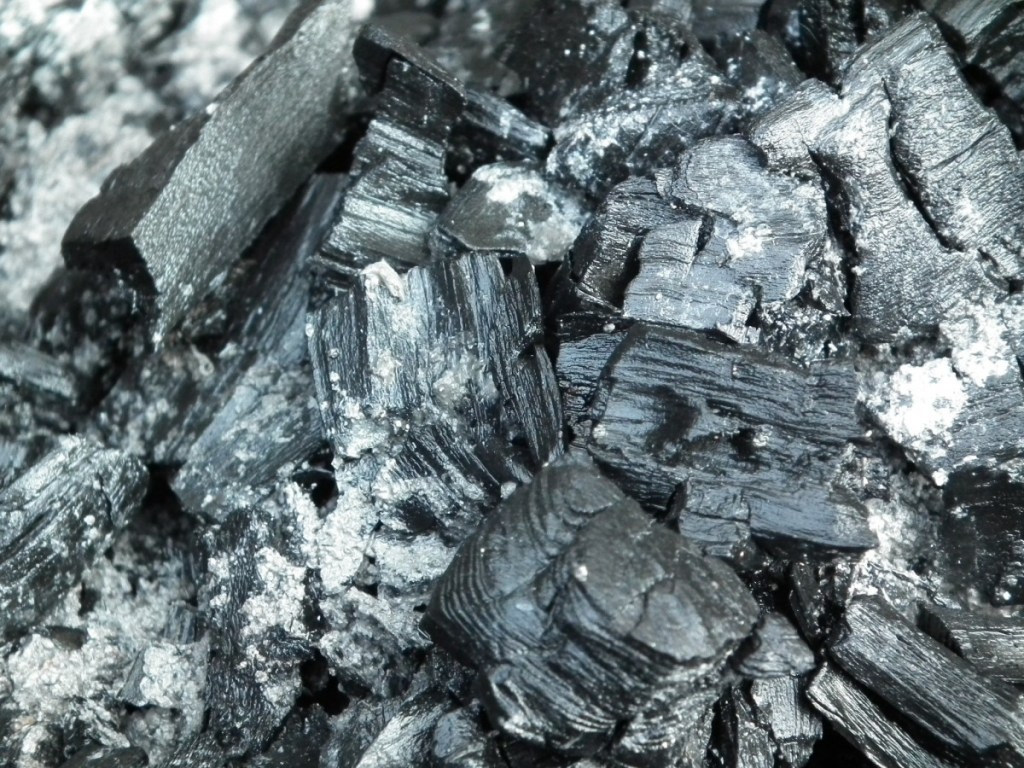
Phlogiston is a ridiculous word to pronounce and I’m thankful that the theory was disproved pretty quickly, but for a while it was believed that phlogiston was a ‘fire-like’ substance that was released by materials when they burnt. The mass of the escaping phlogiston was a convenient explanation for why things, like wood, became lighter when burnt. When it escaped the phlogiston was absorbed by the surrounding air which also explained why things stop burning in a closed container. We know now that the burning stops because all the oxygen is used up but the phlogiston theory suggested that the air in the container would become saturated, couldn’t absorb any more phlogiston and so the burning would stop because the phlogiston had nowhere to go.
There was a problem with this theory though. If you burn a metal its ash, called calx, is actually heavier than the original metal. To accommodate this fact the theory was amended and it was posited that phlogiston could have negative weight, that phlogiston was buoyant. Think of a balloon filled with hydrogen gas. Because the hydrogen is buoyant in air it feels to be lighter than an empty balloon (even though it isn’t really2). So when phlogiston escaped the metal it’s buoyancy went with it and what was left weighed more. Why this didn’t work for a block of wood I’m not sure, and at the time people were also not completely convinced by phlogiston. So when Joseph Priestley discovered oxygen in 1744 a French scientist called Antoine Lavoisier realised that this new substance could provide a different explanation.
Lavoisier suggested that combustion was a chemical reaction between oxygen and the burning material. He proved his theory using a meticulous series of experiments during which he initiated the chemistry we now think of as oxidation-reduction reactions. In Lavoisier’s theory oxidation is the addition of oxygen and reduction is the removal of oxygen. When a block of wood burns oxygen in the air reacts with hydrogen and carbon in the wood to produce carbon dioxide and water. This explains why wood ash is lighter. The CO2, a gas, and water, turned to steam by the heat, rise into the air and are dissipated. When you burn a metal you don’t get gases you get metal oxides, that is the metal atoms themselves react with the oxygen, they don’t form gases and so nothing gets dissipated. This is why calx weighs more than the original metal, there is the added mass of the oxygen in the metal oxide.
You may be wondering by now what this has to do with electrons? I did say that oxidation-reduction reactions were the movement of electrons between molecules not oxygen. Well what happened is that as the reduction-oxidation theory was further developed it was widened to encompass the addition and removal of electrons. Lavoisier’s reduction-oxidation of oxygen become a specific case of a more general process of electron movement between molecules. This has enraged chemistry students ever since because Lavoisier’s original terms were retained. This means that reduction is now the gain of electrons (originally the removal of oxygen) and oxidation is the loss of electrons (originally the gain of oxygen). Confusing, right?
To help us better understand this I’ve put the chemical reactions that occur in iron smelting and burning below. Most metals are found in their oxide form in the wild, that is they are combined with oxygen. To obtain pure iron from iron oxide you need to reduce the iron oxide, that is to remove the oxygen, which is what happens during the smelting process (Fe2O3 + 3CO -> 2Fe + 3CO2). Carbon, in the form of coking coal, is used as a reducing agent. The carbon is oxidised (it receives oxygen molecules and loses electrons) and the iron oxide is reduced (it loses oxygen and gains electrons).

We are getting perilously close to oxidation states and the balancing of redox reactions so I’ll stop, except to say that the carbon is considered to have lost electrons because oxygen is more electronegative than carbon and it ‘hugs’ the shared electrons in the covalent bonds of the CO2 more closely (I discussed electonegativity in the emulsion post if you want a refresher). If you want to regenerate iron oxide you can burn the pure iron, like we discussed above, in which case you are oxidising it, adding oxygen from the air and causing the iron to lose electrons because of the electronegativity of oxygen.
There are a whole bunch of rules and processes for tracking electron movement in redox reactions. Balancing a redox reaction is a good exam question and it can get a bit hairy hence the fear redox reactions have inspired in chemistry students. Really for the cook we don’t need to understand all that, it would be a very rare day indeed if a cook needed to balance a redox reaction. So if you want to think about it the way Lavoisier originally thought about it, as the addition and removal of oxygen, that’s OK but keep in mind that it is actually electrons that are the important things (if you want to get into the details here is a good start). This is particularly important when we start looking at some redox reactions that a lot people have a keen interest in, namely dietary antioxidants.
We all know that antioxidants are an important part of our diet. Molecules like vitamins C and E and anthocyanins are antioxidants, they are abundant in fruit and vegetables and they are why we should all be eating more fruit and vegetables. The reason that antioxidants are so important comes down to redox reactions and a class of molecules known as free radicals. I haven’t really covered atomic orbitals yet but free radicals are molecules that have an unpaired electron in their valence shell. For now you can just think about them as having a spare electron. Unpaired electrons are not energetically stable so a free radical is highly reactive as it wants to stabilise itself by pairing it’s spare electron. It can do this by stealing an electron from another molecule, damaging that molecule and potentially causing a chain reaction that produces unwanted chemical products. The unpaired electron makes a free radical a very powerful oxidising agent, it aggressively oxidises other molecules.
Free radicals are often produced in the body because of various biochemistries but we don’t really want too many of these reactive species floating around because they can react with molecules that we really don’t want them reacting with (DNA for example). This is where antioxidants come in as they are often reducing agents, that is they can donate electrons to other molecules (thus reducing them). So antioxidants can donate electrons to free radicals and neutralise their reactivity. In the post about bacon we saw that nitrites can develop into n-nitroso compounds that can lead to cancer. The chemistry that produces these compounds often involve redox reactions and antioxidants are able to disrupt their production by neutralising intermediate free radicals. If you are experiencing oxidative stress, i.e. you have a lot of free radicals floating around because you’ve eaten a pound of bacon, antioxidants are what you want to ‘soak’ up the free radicals.

As I discussed above the browning of some fruits and vegetables upon exposure to oxygen is another redox reaction you’ll find in the kitchen. In this case it is an example of enzymatic oxidation as polyphenol oxidase (PPO) in the fruit catalyse the oxidation of naturally occurring phenolic compounds in the presence of oxygen. This isn’t a problem when the fruit is fresh and whole as no oxygen can get in. But when the fruit is cut or begins to age the cells of the fruit are exposed to oxygen and the phenolic compounds are oxidised into molecules that undergo further non-redox reactions to become pigments. These pigments are what discolours the fruit. Melanin, the same molecule that causes tanning in humans, is often one of these molecules hence the brown colour the cut fruit often takes (if you want to read an exhaustive account of discolouration in onions click here). Putting sliced fruit into water acts to prevent discolouration because there is no free oxygen (such as we find in air) so no oxidation occurs. An acid, like lemon juice, will also retard discolouration because the acid denatures PPO and prevents it catalysing the oxidation reaction.

Oxidation can also reduce the amount of antioxidants in a piece of fruit. Oxygen in the air, in the form of O2, is an oxidising agent so when antioxidants, like vitamin C, are exposed to the air they will start reacting with the O2 and the antioxidant will lose it’s capacity to act as a reducing agent. Lemon juice while not directly preventing this does introduce a lot more antioxidants to the mix, lemon juice has vitamin C and citric acid both of which are reducing agents, so they may protect the natural antioxidants just by increasing the amount of reducing agents available. Likewise older fruit, especially if they are starting to brown are likely to have had some reduction in their antioxidant content.
Spoilage of fats is another process where redox reactions take centre stage. The most important pathway causing butter to go rancid is a light sensitive oxidation pathway that breaks down carbon-carbon double bonds in unsaturated fatty acids. This reaction releases peroxides which in turn causes secondary breakdown products like alcohols, ketones, and aldehydes that can breakdown even further. These volatile molecules are one of the primary contributors to the smell and flavour of rancid butter. To prevent this kind of rancidity in butter water is again your friend and something like a butter bell can keep your butter from being exposed to too much air.

Redox reactions are also very important in wine making, a wines redox potential is a measure of it’s tendency to undergo reduction or oxidation reactions. A high redox potential indicates a tendency to oxidise which can cause browning and the development of off flavours caused by acetaldehyde. A low redox potential means more reduction reactions which can also lead to undesirable sulfur compounds that cause ‘rotten egg’ type odours.
Look I could go on but I’ve already talked a lot about redox reactions in previous posts without actually calling it out. Fermentation, respiration, cured meats, Maillard reactions and caramelisation all involve redox reactions in one form or another. So I’ll leave it here but just keep in mind the redox reactions are everywhere and they will be definitely popping up again in future posts. And consider that although the myth says that Prometheus stole fire from the gods if the Greeks had better chemistry it would have been redox reactions that he stole not fire.
Footnotes
- He actually developed a formal theory based on previous ideas, most notable those proposed by Johann Joachim Becher. Wikipedia has a good page on phlogiston if you are interested. ↩︎
- A balloon filled with helium has more mass than an empty balloon so it does weigh more, but if you are just plopping it on a scale the empty balloon will be heavier because of the buoyancy of the hydrogen gas not because it weighs less. ↩︎


 The Science of Food

Leave a reply to Gary Cancel reply