
The primary aim of this blog is to become a better home cook by learning some of the science of cooking. But I do have a secondary aim and that is to occasionally talk about how science works in the context of food science. This week is the first week I’ve really focused on how science works and, frankly, it’s turned out to be a bit of a rant. The reason for this is I’ve spent the last few days immersed in the type of crazy you can only find on the internet. It all began when, in my blog post on mayonnaise, I touched briefly on the topic of whether low-density lipoproteins (LDLs) from eggs were bad for human health. I’m a scientist but I don’t know a lot about nutrition, it’s not my field, but I’d heard you shouldn’t eat eggs but I was also sure someone had said that wasn’t the case anymore and you could eat eggs. Like most people I wasn’t really sure so I decided to do some reading and that’s when I fell down the rabbit hole.
It turns out I’ve been completely oblivious to a dietary battle that’s been raging the past few years and whether eggs are good for you or not has been swept up in that conflict. By oblivious I knew there was some controversy about saturated fats and sugar and I knew there were low-carb diets like Atkins, what I didn’t know was that there is a whole narrative around a sugar conspiracy that supposedly has been perpetrated to stop people eating saturated fats and start eating sugar. This battle has been waged by those who believe the traditional narrative that saturated fats, butter and other animal fats for example, raise circulating cholesterol and are bad for you and those who believe sugar is the true culprit and that the saturated fat advocates have perpetrated a crime against humanity.
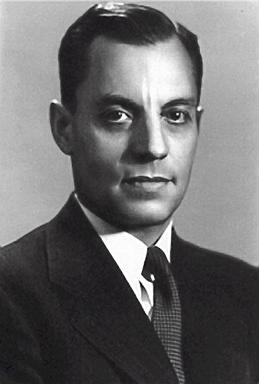
The roots of this conflict date back to the 1950’s when heart disease started to kill a lot of middle-aged white guys. One of those middle-aged white guys happened to be the US President, Dwight Eisenhower, who in 1955 suffered a near fatal heart attack and a guy called Ancel Keys was brought in as a consultant to advise the president, and the nation, on how to avoid a similar fate. Ancel Keys was a scientist who had developed a theory that saturated fats led to heart disease. The thinking was that eating saturated fats (see the fats and oils post if you don’t know what a saturated fat is) increased circulating cholesterol leading to heart disease.

In 1955 Keys only had, what I would call, preliminary data to support this theory but beginning in 1958 he began a study known as the ‘Seven Countries Study’ in which he purported to show that countries that had a high consumption of saturated fats also had a high rate of heart disease. Keys was a charismatic guy and he was able to parlay the notoriety of having advised the president and the scientific reputation he gained from the publications pouring out of the Seven Countries Study into prestige appointments to peak scientific bodies, an appearance on the front cover of Time magazine and a general fame beyond the scientific community. He used this fame to spread his message that saturated fats will kill you, so butter and steak became the bad guys, companies, recognising a golden profit opportunity, started making lots of health claims for their plant derived foods and doctors and nutritionists started recommending low-fat diets.
But, as is so often the case, things were a little more complicated. Starting in the 80s everyone started to get fat, obesity rates soared and diabetes rates also started to increase. Turns out excessive sugar consumption can also cause health problems and people started blaming the focus on saturated fats for this new health crisis. The arguments were generally along the lines of you can only eat protein, fats and carbohydrates and if you aren’t eating fats you’re likely to be increasing you’re intake of carbohydrates, aka sugar. The trend to high sugar foods was also exacerbated by the greed of the food industry who took the low-fat message way too far, creating trans fats and highly-processed, starchy and sugary foods that were marketed as healthy. People started advocating against sugar and started looking at Keys work again and this is where the things became controversial.
One of the major controversies that erupted was whether the Seven Countries Study actually provided sufficient scientific evidence to support the claims made by Ancel Keys about saturated fats. I’m not going to go into the minutia of this much contested study, there is plenty of that going on here, here, here and here (just a small sample and none from the literature which has many more but these are shorter and easier to read). What I will say is that for its time it was ground breaking, no other study had attempted an epidemiological study of such scope and for that reason alone it should be respected. But the bottom line is that it was an associative study and associative studies, like studies of any type, have their limitations, the major problem for associative studies being that correlation does not mean causality. Also, again like any other study of this type, there are flaws that restrict it’s applicability to wider populations and comprise it’s statistical significance (the limitations section of this white paper highlights some of these flaws, note that it is actually defending Keys work).
At this point I’m going to have to expose my own bias, I’m what I think of as a hard-science scientist. I like scientific advances that start with a hypothesis, are tested in a controlled experiment and are then accepted or rejected on the data generated in that experiment repeated multiple times, you know chemistry and physics basically. And when I say data I mean quantitative data, stuff you can measure with some expensive equipment, not dietary recall or self reporting. I’m not siding with the anti-Keys team here, Keys found a correlation but a correlation isn’t causality so what I see in Keys study is a starting point, you can argue all day whether his effect is real or not but either way more work needs to be done to provide evidence for any position. From my hard science ivory tower I would say that Ancel Keys study didn’t tell us anything at all, except that we should look for some mechanistic explanation for this potential effect.
I’m not trying to denigrate the work of social scientists and epidemiologists and I know that if we stuck to hard science and controlled experiments we would know a lot less than we do now about a lot of things. It is hard to work out whats going on in complex systems like the human body and it is hard to do hard science on human nutrition. Do you just take some newborns and raise some on saturated fats and some on a low carb diet and see which group lives the longest, of course not. When it comes to nutrition we often don’t really have a choice but to use imperfect methodologies, proxy variables, data that was collected for other reasons or by getting humans to tell us things about themselves and then try to muddle through the lies and confounding factors.
But when correlation is your major tool you are wide open to confounding factors. Do you know what else happened between 1900 and 1950, the period in which the rise in heart disease led to Keys formulating his theories? A massive decrease in the rate of infectious disease and a concurrent increase in the rates of antibiotic consumption. Could changes in our gut microbiota, caused by newly introduced antibiotics, have been a major driver in the increased rates of heart disease during this time period? Should we be looking at how our diet affects our gut microbiota and how it in turn affects how heart health? I can’t answer these questions, though many are trying right now, but Keys had no idea about the importance of the microbiome and couldn’t control for it in his correlation studies and neither could the low carb advocates until recently. My point is that because our tools for reasoning about human nutrition are so limited everyone should be exhibiting some humility when advising others about our diet and health, but I don’t really see this at all.
Because nutritional studies are so hard and so many assumptions and comprises are made in the experimental design every study just raises more questions. And guess what, that is perfectly fine that is literally what science is all about. It’s important to realise that the Seven Countries Study is not alone with it’s flaws, almost every study in this field can be criticised for similar shortcomings in experimental design or methodology. Sure the Seven Countries Study was influential and that’s because it was the first, and yeah, on the back of this study Ancel Keys influenced dietary recommendations but Ancel Keys never told anyone to start eating loads of sugar or trans fats. He actually advocated for what we know now as the Mediterranean Diet a diet that is still considered pretty healthy (probably, who knows in this crazy field). It was the food industry that kicked off the processed low-fat high starch food trend misusing Ancel Keys work to promote their frankenfoods and lobbied the government to prevent it issuing warnings about sugar. Unfortunately the low-carb advocates are now doing exactly what they say Ancel Keys did, they are promoting extreme diets based on research that is just as open to debate as the Seven Countries Study or using anecdotal evidence like the diets of Masai tribespeople and trying to apply it to western urbanised populations.
The Seven Countries Study started in 1958 and yet there are still battles raging online debating the results of the study. I think it is time we all got over this study and moved on but it seems many cannot. And, call me a cynic, that’s because of money, the reason people still care about Keys study is that nutrition is a big business and there are people making big bucks from selling competing narratives and in each of these narratives Keys study plays a key role. If you’ve been selling sugary food and hydrogenated fats for the last forty years you are a strong supporter of Keys, if you are writing books about the “sugar conspiracy” or trying to sell the Atkins diet, or other low carb diets, Keys is a villain who used scientific fraud to make us all fat. Competing narratives often inspire poor scientific practices, for example, on one organisations website I was reading a critical post about Ancel Keys in which they quoted a pretty damning dismissal of Keys work. When I found the source of the quote it turned out to be what looks like a self-published ‘paper‘ from 1991 that featured the following interesting graphic on the third page, I didn’t read all 847 pages of it but with their bias so boldly proclaimed I doubt I’m missing out on an objective critique.

So we’ve made a complete mess of something as fundamental as a healthy diet and clearly a lot of the blame needs to go to the food industry and other groups that have sought to profit out of provisional scientific findings. But I think scientists also need to shoulder some of the blame. Take Ancel Keys who, while I think was not as bad as some have painted him to be, was still a bit of a dick. He had his theories about saturated fats and he aggressively promoted them, he publicly ridiculed anyone promoting alternative theories and he used his influence at peak scientific bodies to influence what research got funded. The fact is a high sugar diet is also bad for you, as we’ve found out of the last few decades, but Ancel Keys was focused on his magic bullet, saturated fats. Indeed, far more than any possible shortcomings of the Seven Countries Study, more damning to me is the possibility that Ancel Keys generated data contradicting the saturated fats theory that he didn’t publish (see here for a paper on that). We could have known about the potential dangers of saturated fats and sugar in the 60s but that wasn’t to be and I think Ancel Keys bears some responsibility for that.
But Ancel Keys was not some type of once in a generation aberration, this type of behaviour is not that unusual among scientists and some would say he acted the way scientists should act in promoting their work. Science is a reputation-based endeavour. Businesses use money to keep score, scientists use reputation, they don’t get paid a lot but they sure as hell care about their reputations. Papers, editorial positions, funded conference presentations and all the other rewards for successful scientists depend on a scientist boosting their reputation. A scientist absolutely needs to sell their science, they need to explain it to others, get papers published and win grants. You don’t do this by underplaying the importance of your research. Humans are story telling animals and a scientist needs to build a narrative around their work if they want to get noticed and the enemy of a simple compelling narrative is subtlety and nuance.
This need for scientists to sell their research is amplified by the media. The media consistently reports scientific work as breakthroughs instead of incremental improvements and often draw widely inappropriate conclusions completely unsupported by the work that they are reporting (one of my papers suffered this fate and Discovery Magazine published an article lambasting the poor media coverage). Commercial interests often do the same, happy to use the merest hint of a favourable scientific opinion as the basis of a promotional campaign. Look at the multi-billion dollar vitamin supplement market that exists on the barest whiff of scientific validity. All of this pressure to sell their research makes it very easy for scientists to slip into the kind of behaviour displayed by Ancel Keys, even if it is just by doing nothing and letting the media over-hype their research.
In other scientific fields these problems aren’t such a big deal.If a physicist puts out a theory about quantum spin, my apologies to physicists, but the only people that really care are other physicists. But when it comes to nutrition everyone is very interested. People want to be healthy, they don’t want to die of heart disease and they want to feed their children a proper diet. Unfortunately, the inconsistent messaging about nutrition does little to bolster confidence in science and provides ample opportunity for those wishing to exploit science for monetary gain. Somehow it has to be communicated that science generally advances through slow, painful and potentially wrong incremental steps, usually involving many disagreements between researchers. All recommendations on nutritional matters are provisional and based on current knowledge only, anyone promising that they have the scientific solution to nutritional questions and you should buy whatever they are selling is lying to you.
The inability of science to communicate the idea that scientific consensus is built over time and that studies build on other studies to incrementally improve our understanding is part of the problem with our public discourse. People still argue over the Seven Countries Study, a study that began in 1958 for gods sake, and a single retracted paper now forms the basis for at least one pseudo-scientific movement I can think of. Scientists are happy to foster an image of themselves as dispassionate, objective arbiters of truth but it is also a truism in academia that science advances when old scientists die because old scientists don’t like to say they were wrong and old scientists often hold all the power. Scientists know the public perception of science is somewhat disconnected from the messy reality of competing theories and academic politics but we do little to try and explain how scientific consensus gets built and the limitations of the scientific method when practised by humans. I understand that there is some hesitation to do this, admitting stuff like this also gives ammunition to those trying to discredit some very well established scientific theories, but prevarication will only erode trust in science anyway.
Originally I asked what I thought was a simple question: are eggs good for you or not? Am I in a position to answer that question now? I think I am, the consensus is that eggs are fine, dietary intake of cholesterol doesn’t appear to affect circulating cholesterol that much so I’m fine with eating eggs in moderation until more evidence comes along. But you know I’m a scientist and I’ve been trained in how to interpret the literature, look out for predatory journals, recognise the limitations of different types of studies and come up with a more nuanced opinion based on the available evidence. What if I wasn’t a scientist? What if I was just someone wanting to know how many eggs they should feed their children? Do they want to dig through acres of blog posts and academic papers so they can form a nuanced opinion? No, and I didn’t want to either, we just want a straight answer and this is where messaging about human nutrition has been hijacked by a whole range of vested interests trying to turn a buck or gain political power by exploiting peoples real concerns and fears. Scientists need to fight back but how do we achieve the incredibly difficult task of communicating challenging, nuanced opinions when academic survival often involves doing exactly the same thing that as those seeking to profit from scientific misinformation?


Leave a Reply