
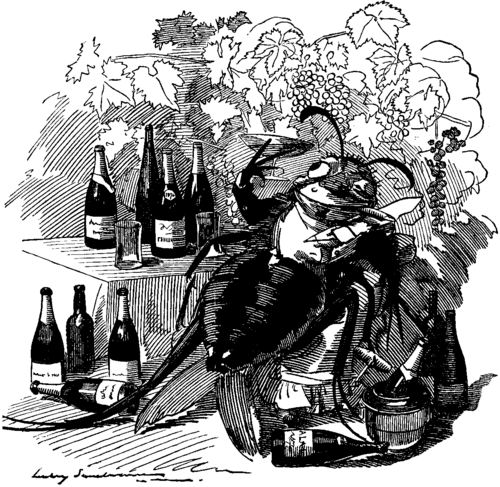
Can you imagine a world without French wine? A world without the wines of Champagne, Bordeaux, Burgundy and Provence? A world in which French people don’t look down their nose at the wines of the rest of the world? Is such a world even possible? Well, in the late 19th century this is exactly the world that almost came into being. And it wasn’t just French wine. German, Italian, Spanish, Australian, South African and even Californian wines were all threatened with extinction.
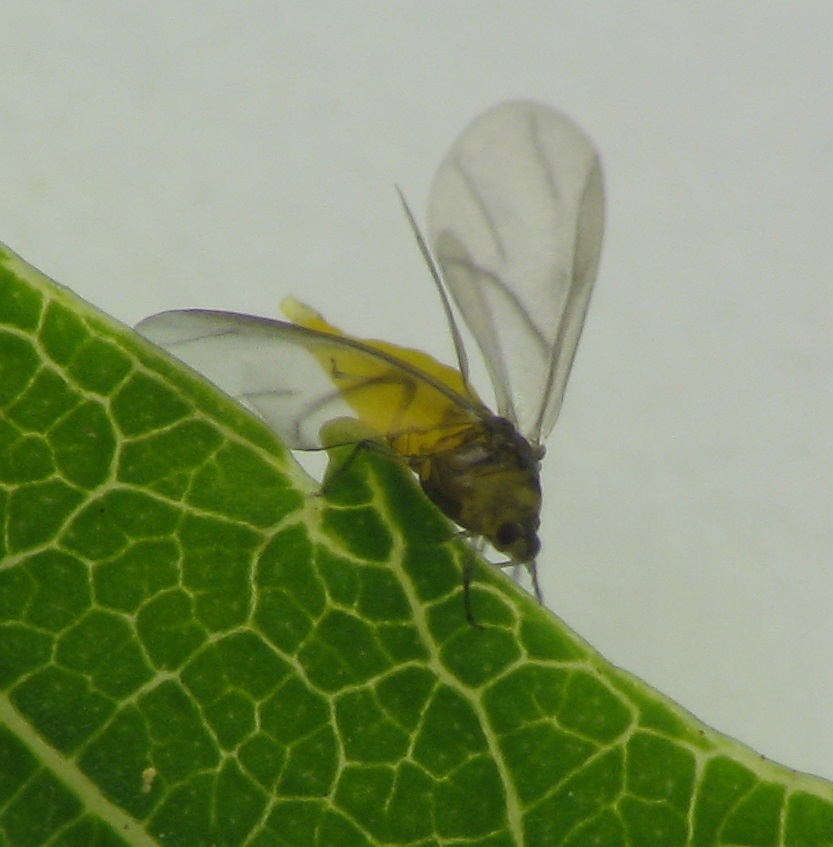
The culprit for this near disaster was an American. No, it wasn’t a rogue president seeking regime change but an insect. Sometime around 1860, a North American aphid-like pest, called phylloxera1, made its way to Europe and proceeded to kill Old World vines at an alarming rate. For two decades European vinestocks suffered catastrophic declines as phylloxera spread across the continent killing vines almost everywhere that it found them. By the late 1860’s the European wine industry stood on the brink of extinction. It looked like the end of 6,000 years of wine production in Europe; some of the world’s finest vintages consigned to history.
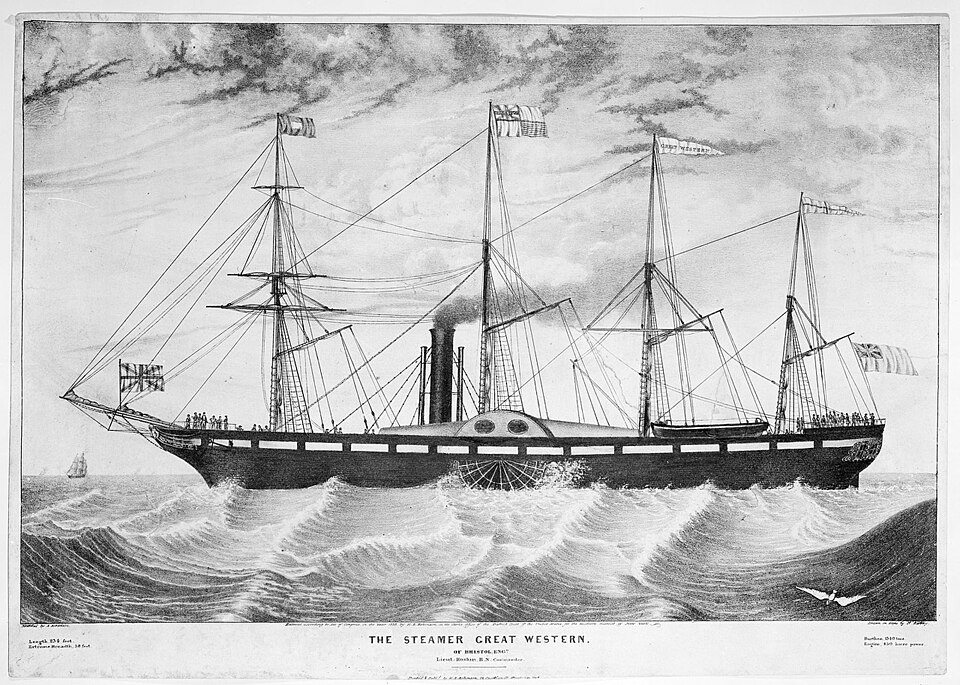
All this came to pass because phylloxera was a stowaway. It came along for the ride on infected New World vines that were brought back to Europe by botanists, horticulturalists and viticulturists interested in the botany of the New World. While this had been happening for decades, phylloxera had never been able to survive the long journey by sail. But when steamboats started crossing the Atlantic, in the mid 1800’s, phylloxera could survive the much quicker transit time. Those who brought American vines to Europe were now, without even knowing it, running phylloxera tour groups2. When, inevitably, the New World vines were planted in Europe, phylloxera found that Old World vines would do just as well as their traditional host and they set off to explore this new continent.
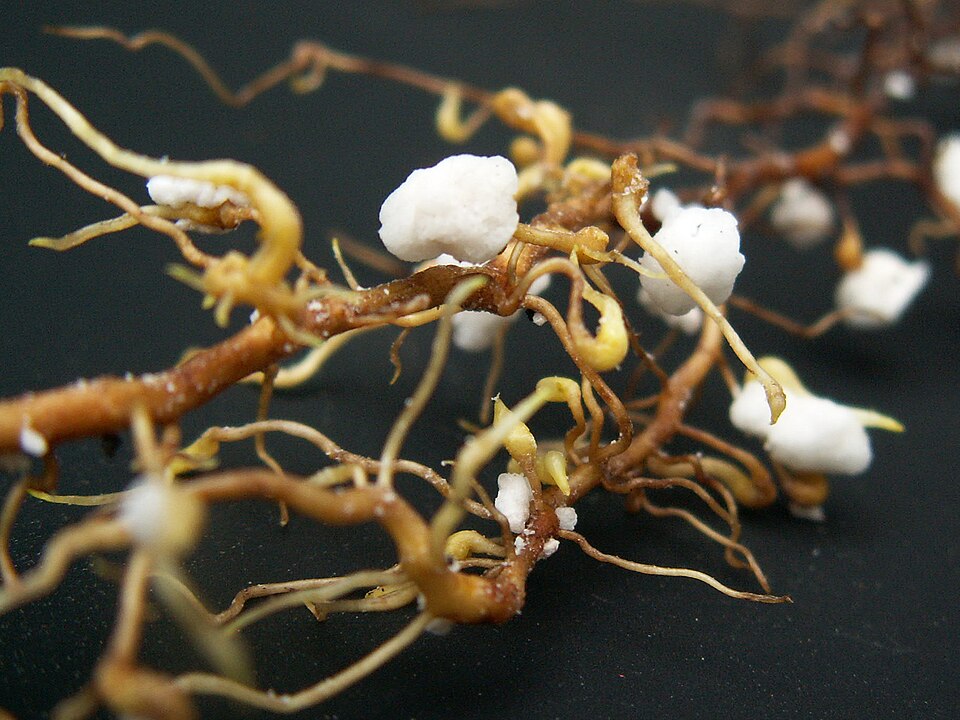
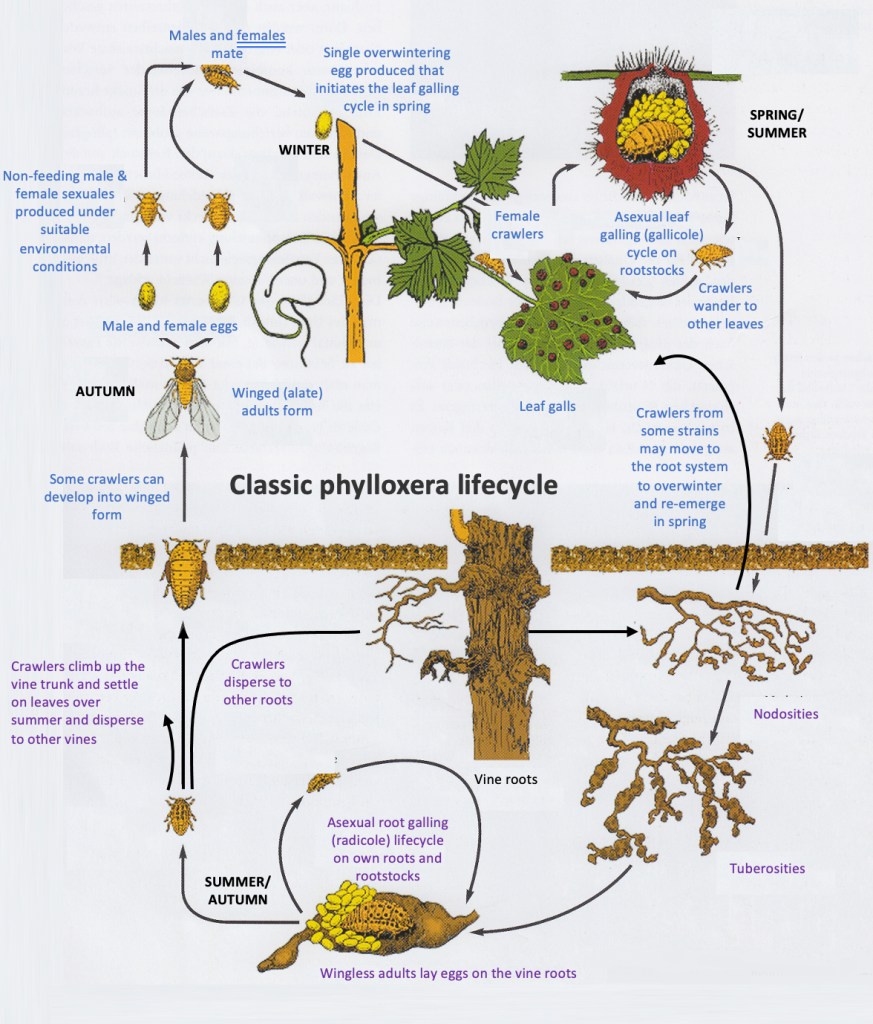
For phylloxera, exploring means infecting new vines and an infection normally starts when the nymph form of the insect, commonly called a crawler, arrives on the root of a vine and starts feeding. Crawlers feed by piercing the root and injecting their saliva which contains molecules that transform the plant tissue, causing it to start accumulating sugars and amino acids. This leads to the formation of swellings on the root called nodosities that act as a food sink for the insects. Once established the crawlers can survive a winter by hibernating and, when not hibernating, the reproduce asexually creating multiple generations of new crawlers that either continue feeding on the root or move to other roots on the vine, the roots of other vines or the leaves of the vine.

Over time, as the crawlers continue to feed, the nodosities develop into more harmful structures called tuberosities that disrupt vascular tissue and make the roots more susceptible to secondary infection by parasites and bacteria. Ultimately, the roots, unable to transport nutrients and riddled with disease, can no longer support the vine. Three to ten years after infection the vine dies.
Amazingly, what I’ve described here is only a tiny bit of the life cycle of phylloxera. There are about 18 different life stages that it can pass through, some on the root and some on the leaves. For all our sake’s, I’m not going to go through this life cycle in detail (though you can see it in the figure below). Rather, it’s just worth noting how this life cycle makes phylloxera incredibly hard to combat. The adult females can all reproduce asexually and very quickly produce multiple overlapping generations. Phylloxera’s life stages are also mostly independent of the stage that preceded it. So, for example, even if you treat the plants with insecticides and kill all the insects on the leaves, the forms that are hibernating in the roots are almost impossible to reach. The next summer they’ll wake up and continue on their merry way.
Poor old Vitis vinifera, the most common of the Old World grape vines, had never seen anything like this aggressive pest and it was completely defenceless. Phylloxera spread quickly through the vineyards of Europe, often, ironically, via the shoes and implements of seasonal workers moving to unaffected regions in search of work3. Wherever phylloxera turned up massive damage was done to the vine stocks and the wine industry started to collapse. In France, phylloxera destroyed approximately 40% of the vinestock, causing a massive income shock as large segments of the rural population lost their livelihoods, and in many cases turned to crime (see here for an article on this).
It didn’t take too long before panic gripped Europe. At first no one even knew why vines were withering and dying. But, by 1868, scientists worked out that the dying vines had massive infestations of phylloxera and realised that this insect was the cause and the search for a remedy began. As usual, when desperation stalks the land, people were willing to try anything. Some of the more ludicrous things people tried included burying live toads under infected vines, driving urine soaked nails into roots and pouring wine over roots in the hope that it would kill the bugs. None of these met with much success.
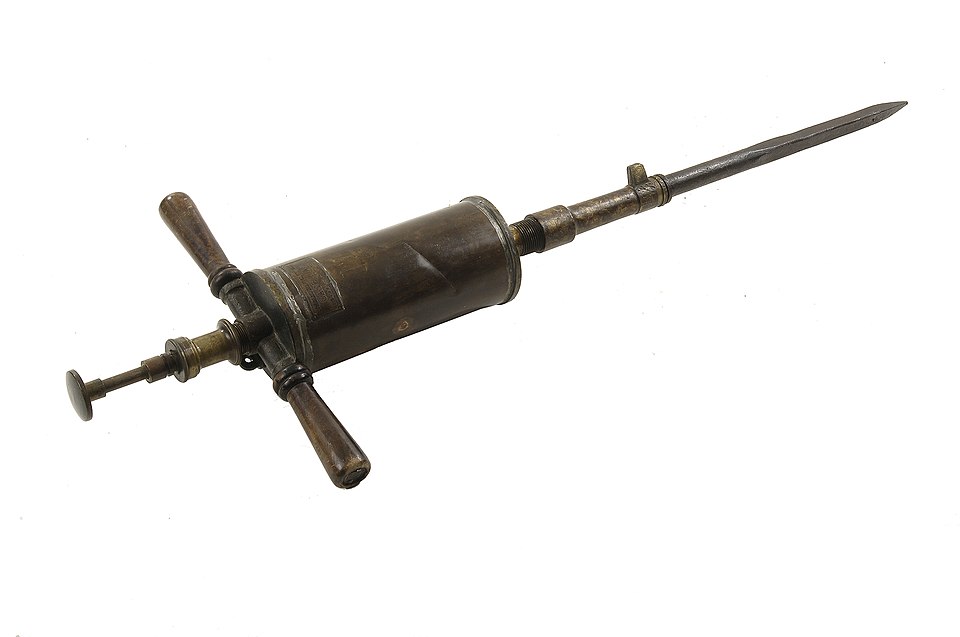
Flooding vineyards to drown the pests was reasonably effective, but it needed to be for a long time, up to 40 days, it needed to be repeated regularly, and most vineyards just didn’t have the right geography for flooding, it’s hard to flood a hillside for example. Injecting carbon disulphide (CS2) into the ground around vines also showed some promise but was never really practical; CS2 is highly flammable, so you were running the risk of burning your whole vineyard down, it needed specialised equipment, had to be done twice a year, had to repeated if it rained too soon after treatment, needed to be done multiple times per square foot and needed fairly specific type of terrain. It was far too expensive for most vineyards.
There was one ray of hope though. It was noticed pretty early that some American vines were resistant to phylloxera. In the vanilla post we saw how Mexican bees and the vanilla plant evolved together over long periods of time until the only bees that could pollinate the vanilla plant were Mexican bees. This was a symbiotic relationship, beneficial to both parties, but pathogens and their hosts are also in a similar long-term evolutionary relationship. Pathogens want to ensure their survival by being better able to infect their hosts4. Hosts, on the other hand, want to protect themselves from pathogens and are constantly evolving novel ways to avoid infection. The end result is a dynamic balance between the pathogen and the host over time as they evolve in response to each other.
Phylloxera was so devastating in Europe because the old world vines had never developed these defences. Why would they? There was no way for phylloxera to get to Europe till humans invented steam ships. Some New World vines though had evolved alongside phylloxera for a very long time and had developed defences. They had established a balance with the pest that meant some varieties of New World grape vines did not suffer catastrophic decline in the presence of phylloxera. One of the most effective defences these vines had evolved was a very sticky sap that effectively glued up the mouth of the phylloxera crawlers that tried to feed off their roots.
You may be asking about now, why didn’t everyone just plant the resistant new world vines and make wine from those? Well some did, the problem was that the wine wasn’t considered very good. New world vines have a molecule called methyl anthranilate that contributes to a sweet musky flavour that makes the wine taste more like grape jam, a flavour referred to as “foxy” by those who know about wines. Of course taste is subjective, maybe we’d all have grown to love foxy wines if it was our only choice, but those used to the more complex wines coming from V. vinifera weren’t willing to give up their favourite tipple.
What was really needed was some way to combine the hardiness of the new world vines with the grape quality of V. vinifera. One obvious way is to produce hybrids. Crossbreed different species of New World grapes with V. vinifera and hope that you got the right combination of traits. Unfortunately, despite lots of trying, hybridisation efforts never really paid off. They were either still susceptible to phylloxera or the grape quality wasn’t considered up to scratch and, in the face of the destruction wrought by phylloxera, acceptable hybrids weren’t coming fast enough5.
But, there was one other way the American vines could be used: grafting. Plants are amazing organisms. I avoided doing much botany in undergraduate, I thought plants were boring. They just sit there turning light into glucose. What’s interesting about that? So it took a long time for me to appreciate just how interesting plants are. One of the ways that they are interesting is that you can take parts of one plant and stick them onto parts of another plant from a closely related species and they’ll start growing together, literally becoming a frankenplant.
In humans, something like grafting is very tricky. Even within the same species, moving bits of one person to another, like in an organ transplant, is fraught with peril. We have a very aggressive immune system that is trained to attack any non-self cells that it comes into contact with, so any foreign bits moved into a body will come under attack. This is why patients who receive an organ transplant need to take medication to suppress their immune system, basically, for the rest of their lives.
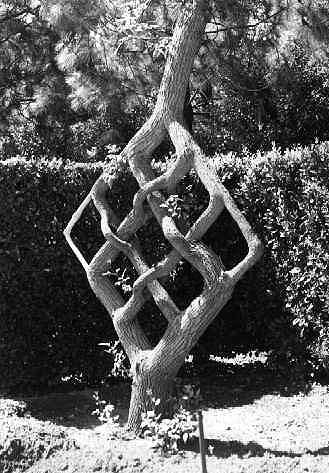
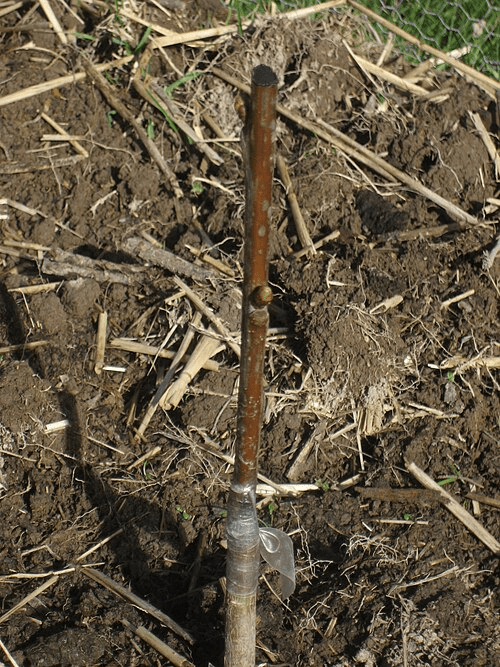
This is not a problem for many plants. If a shoot (called a scion) and a rootstock (basically another plant) are carefully cut, aligned and held together they will grow together and effectively become a single plant. Grafting is a very common technique in gardening where you want to combine two favourable traits from different species (or varieties within a species). For example, horticulturalists can create more resilient organisms by grafting scions from plants that produce desirable fruits onto roots that are able to survive in dry or otherwise inhospitable conditions. Using grafting, you can also create plants that produce multiple types of fruit. You can even create a fruit salad tree that produces peaches, plums, and apricots, like the “Tree of 40 fruits” that produces 40 different stone fruits.
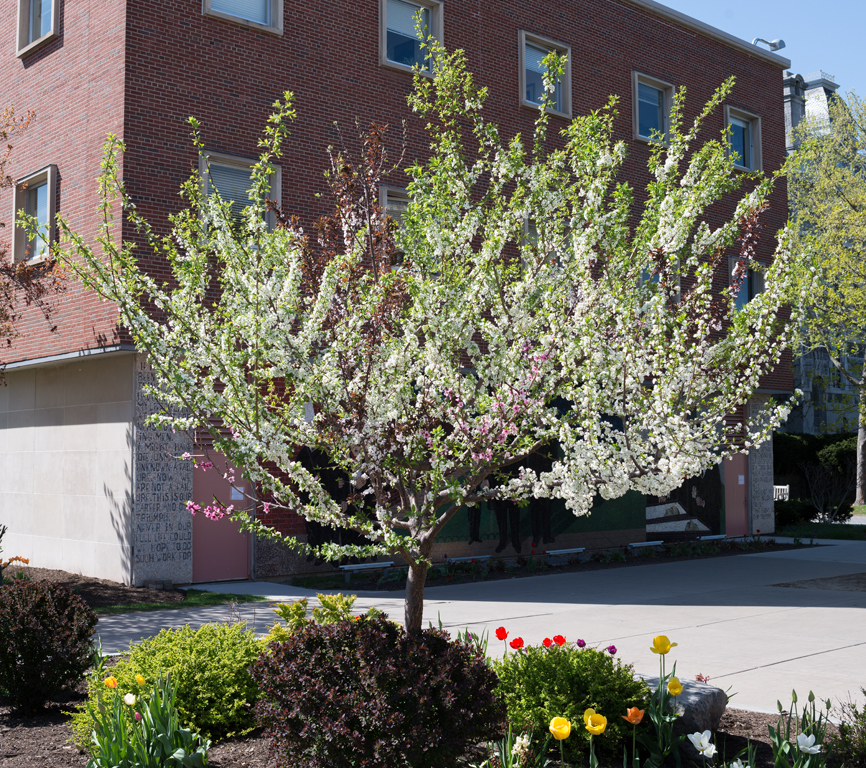
Grafting doesn’t work for all plants, the technique relies on carefully aligning the vascular bundles, the structures that transport water and nutrients through the plant, of the scion and the rootstock. For this reason grafting has traditionally been restricted to the gymnosperms and dicotyledons6 that possess a ring of easily aligned vascular tissue. Monocotyledons, that have scattered vascular bundles, are notoriously difficult to graft7.
You can probably see where this is going. Could grafting be used to combine the phylloxera resistant root stock of new world vines with scions of European vines with their superior grapes? The answer, thankfully, is yes. Grape vines are dicotyledons and the American and European varieties are close enough genetically that they can be successfully grafted. Compared to the extreme susceptibility of their roots, the leaves of V. vinefera showed some resistance to phylloxera (at least until recently) so cultivars combining the roots of American vines and the scions of European vines would effectively be the best of both worlds.
The only problem now were humans. Those looking to save the European wine industry split into two groups: the “chemists” and the “Americanists”. The former committed to pursuing an insecticidal control that would allow them to use the same vines they had been using for a millennia and the latter all about hybrids and grafted vines. Today, many of us are barely aware that the wine industry mostly relies on grafted vine stocks, but back then this was a very contentious issue in France. To be honest, there were some deep seated prejudices about contaminating V. vinefera with the “trash” New World vines, and there were concerns that the grafting would affect the flavour of famous French wines.
The path to grafted vine stocks also wasn’t as easy as I may have made it seem. There were multiple failures, some New World vines weren’t resistant to phylloxera and grafting entire vineyards was fiddly, expensive and time consuming until better methods of producing grafted vines were developed (like bench grafting). Nonetheless, after a lot of grafting experimentation in the 1870s, by the 1880s it was obvious that grafting was the only way to save the wine industry. There were some holdouts, in Burgundy, for example, it was illegal to use grafted vines until 1887, until the inevitably of phylloxera inspired a re-think.
Today about 99% of the wine we drink comes from grafted vine stock. There are some surviving vineyards with ungrafted V. vinefera. Chile, because of its geographical isolation, has never had phylloxera and parts of Australia are also phylloxera-free (which partly explains the sometimes draconian Australian customs requirements). Even in Europe some vineyards escaped. Phylloxera doesn’t like sandy soil so a few vineyards that were lucky enough to be on suitable ground were spared8. Other small areas in Europe escaped the phylloxera scourge for reasons that no one knows, perhaps it was just blind luck.
The big question, I guess, is were the chemists right? Did grafting affecting the flavour of wines? Personally, despite having drunk a lot of wine, I’m not sure I have ever tasted a wine from non-grafted vine, not knowingly anyway, so I really don’t have an opinion. There is certainly a lot of discussion among those knowledgeable in wine (see here and here for example). Scientific inquiry has produced conflicting results suggesting that the rootstock has no effect or that it does change the chemical constituents of the wine in a way that would affect the flavour. And, as I’ve discussed in a previous post, flavour is subjective and many of us don’t actually know enough to detect a difference anyway. So, who knows? I’m not going to be able to answer that question in this post so I’m going to end with a simple word of thanks that in the face of an existential crisis, the literal union of the New World and the Old World saved wine.
Footnotes
- The original scientific name was Phylloxera vastatrix but it was latter reclassified to another genus which required a name change to Daktulosphaira vitifoliae. Despite the scientific name change everyone was used to calling it phylloxera so everyone just kept calling it that and it became the common name for the insect. It’s kind of the same thing that happened to the brontosaurus; originally Brontosaurus excelsus, it was reclassifed to Apatosaurus excelsus in 1903, only to be re-re-classfied Brontosaurus excelsus in 2015. The general public, caring not one whit for this scientific controversy, never stopped calling a brontosaurus a brontosaurus. ↩︎
- Wikipedia blames the outbreak on “avid botanists in Victorian England”, and there were hothouse outbreaks of phylloxera in England around 1863. But more recent work, using genetic analysis, shows that there may have been two separate introductions into mainland Europe, one in France in the early 1860s and another in Austria around 1868. ↩︎
- Australian customs officials get very upset, and will hit you with a hefty fine if you try to bring muddy shoes into the country. Part of the reason for this is phylloxera. ↩︎
- But paradoxically also being not too damaging to their hosts life that they die before the pathogen can complete its life cycle. This is why the mortality rates of a disease can fall over time as one, hosts better able to resist the pathogen survive, but there is also some evolutionary pressure on the pathogen to maximise its transmission and killing your host in five minutes can be real impact a pathogens ability to propagate itself. Like much of biological processes the host/pathogen relationship is all about balance, and bad things can happen when this balance is disturbed. ↩︎
- One could say that an acceptable hybrid still hasn’t arrived. Hybridisation efforts have never really stopped, and, aided by advances in our understanding of the genetics of phylloxera resistance, continue to this day. Nonetheless, hybrid vines are a minority representing only about 6% of the vines planted in the world. ↩︎
- Monocotyledons and dicotyledons are the two main classes of flowering plants, named after the number of cotyledons they possess (a cotyledon is an embryonic leaf that first emerges from a germinating seed). They have a range of morphological differences, such as leaf vein patterns. Gymnosperms are an ancient family of seed bearing vascular plants. One of their defining characteristics is that they possess a “naked” seed not enclosed in a fruit and typically borne on a cone. ↩︎
- Though there has been a recent breakthrough in grafting monocots (there is also a summary of this research here). ↩︎
- Some winegrowers in desperation relocated their vineyards to sandy seashores where, inevitably I guess, they were washed out to sea. ↩︎


 The Science of Food


.jpg)


Leave a reply to Jason Mulvenna Cancel reply