

The world of sauces can be pretty intimidating. The French, in particular, have elevated the art of sauce making to such an extraordinary extent that the whole idea of making a sauce can seem overwhelming. They have their mother sauces, their daughter sauces and a whole culinary tradition based specifically around sauces. To the French a good sauce is the hallmark of culinary ability and in a French kitchen the saucier stands in rank below only the sous and executive chefs. Faced with this tradition, and that it can take up to 24 hours to make a demi-glace, the home cook may think it is just easier to leave sauces to the professionals. I certainly did.

After I’d been cooking for a while though I realised a couple of things: firstly, I wasn’t running a Michelin starred restaurant, and secondly, a sauce is just a thickened liquid containing some tasty stuff. Yeah, if a good restaurant expects us to part with our hard-earned money it needs to make sure its stocks and sauces stand out but us home cooks can lower our standards just a little and still make some pretty impressive and tasty sauces with a fraction of the effort. This is possible because the whole art of saucing rests on a few simple techniques that we can also use to make some quick sauces that still taste pretty good indeed.
If you a regular reader of this blog we’ve already covered some of these techniques. We’ve looked at vinaigrettes; a water in oil emulsion that can evoke a whole world of flavours based on your choice of oil, vinegar and aromatics (chimichurri, for example, goes great on steak). We’ve learned how to make a mayonnaise in 15 seconds, which can then be used to make tartar sauce, remoulade, cocktail sauce, aioli, thousand island and ranch dressing. We’ve looked at making a roux, the technique behind the French mother sauces bechamel, velouté and espagnole. These sauces are, in turn, the base for things like cheese sauce, mornay sauce, demi-glace and bordelaise sauce, not to mention good old gravy and, for some Asian influence, curry sauce.
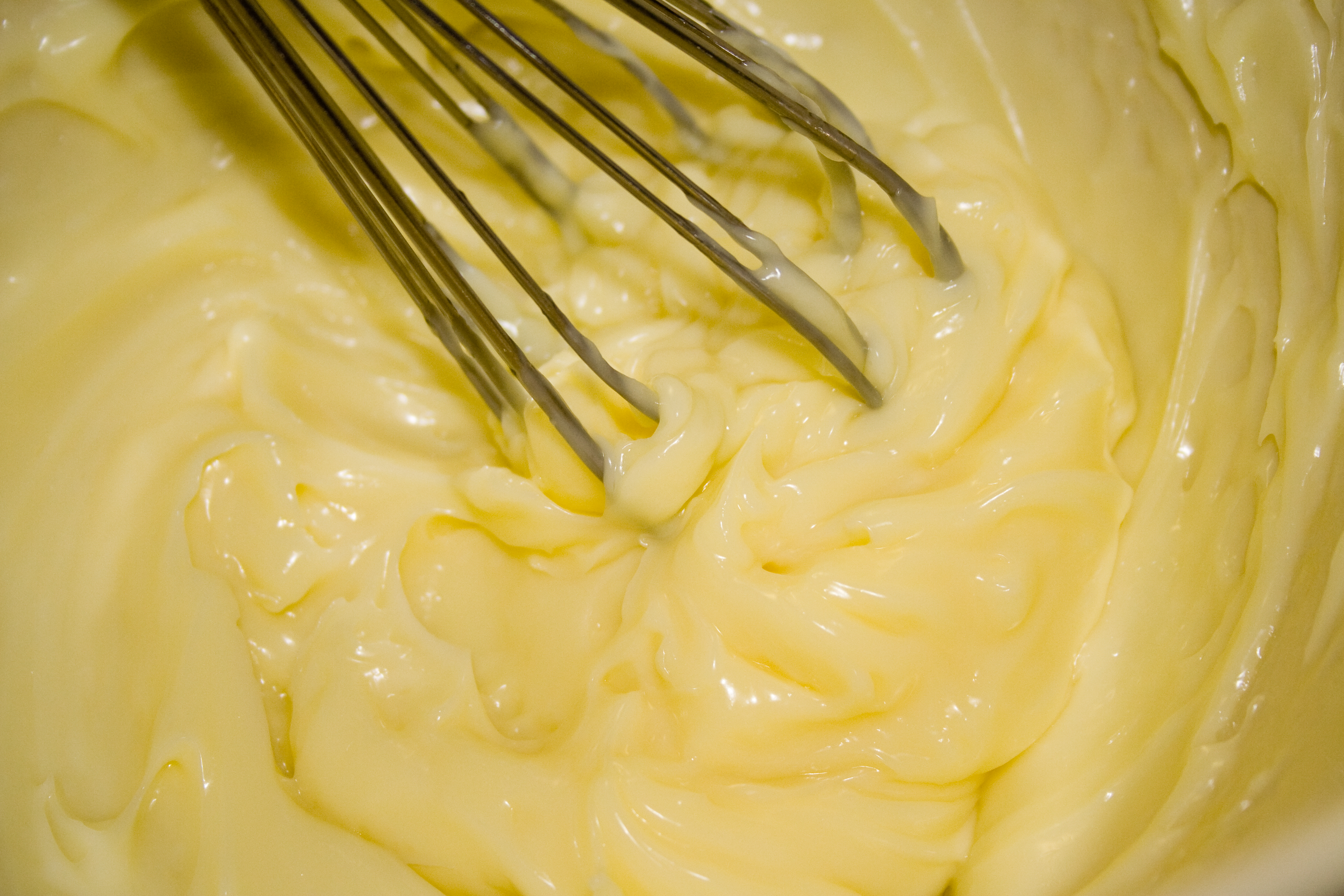
Today I want to add another weapon to our sauce making arsenal and have a look at using egg proteins to thicken a sauce1. The most famous example of this type of sauce is custard, which, at its simplest, is just a mixture of milk (or cream), sugar and flavourings that has been turned into a gel using denatured egg yolk proteins2. The gel can remain a thickened liquid, like in creme anglaise, or be set into a solid, like a custard tart. We’ve seen something very similar to this when we looked at making a roux3. To make a roux we use temperature to break down starch. The resulting network of “unwound” polysaccharides traps water thus thickening a liquid. The amount of thickening is dependent on the amount of starch you add and how many of the starch granules you break down.

When we make custard we are doing exactly the same thing, we’re just using denatured egg proteins, usually from the yolks, instead of starch to build the network. In my second ever post, on how to fry an egg, I described the process of coagulation where heat denatures proteins that unwind and form a network that traps water and “sets” the egg. Making custard is exactly like frying an egg: we want to achieve a certain consistency by coagulating egg proteins to a greater or lesser degree. Just like cooking with starch, the final thickness of our custard will depend on how many egg proteins we’ve added and to what degree we’ve coagulated them. Using these dials, we can produce all the different types of custard, from a runny creme anglaise to a set custard like creme brûlée.

There is a problem though. If we overcook starch it just breaks down, and our gel gets thinner. If we overcook eggs, bad things happen. We already know that if we overcook an egg the network of coagulated egg proteins is so tight that it has squeezed all the water out leaving a dried-up egg. If this happens in our custard we’ll end up with a grainy custard containing little bits of coagulated egg. If that’s not bad enough, we’ll also get the distinctive sulphuric flavours that an over-cooked egg develops when sulphur containing amino acids break down and form hydrogen sulphide, the gas that gives rotten eggs their distinctive odour. Neither grains or the whiff of rotten eggs has a place in a delicate custard, so it’s crucial to keep a tight control over the coagulation of our egg proteins when we are making custard.

You may be asking why bother with egg proteins if they are so delicate? Can’t we just use a starch to thicken our milk or cream? Well, the answer is, yes, we totally can, but then it wouldn’t be a custard. The reason why we bother with eggs is that they produce a more delicate gel and their fat content and emulsifiers bring a velvety texture and a creamy flavour that you don’t get with starches. For this reason, custard is defined as a gel made with some type of dairy that is thickened with egg proteins. Without the eggs it isn’t custard.
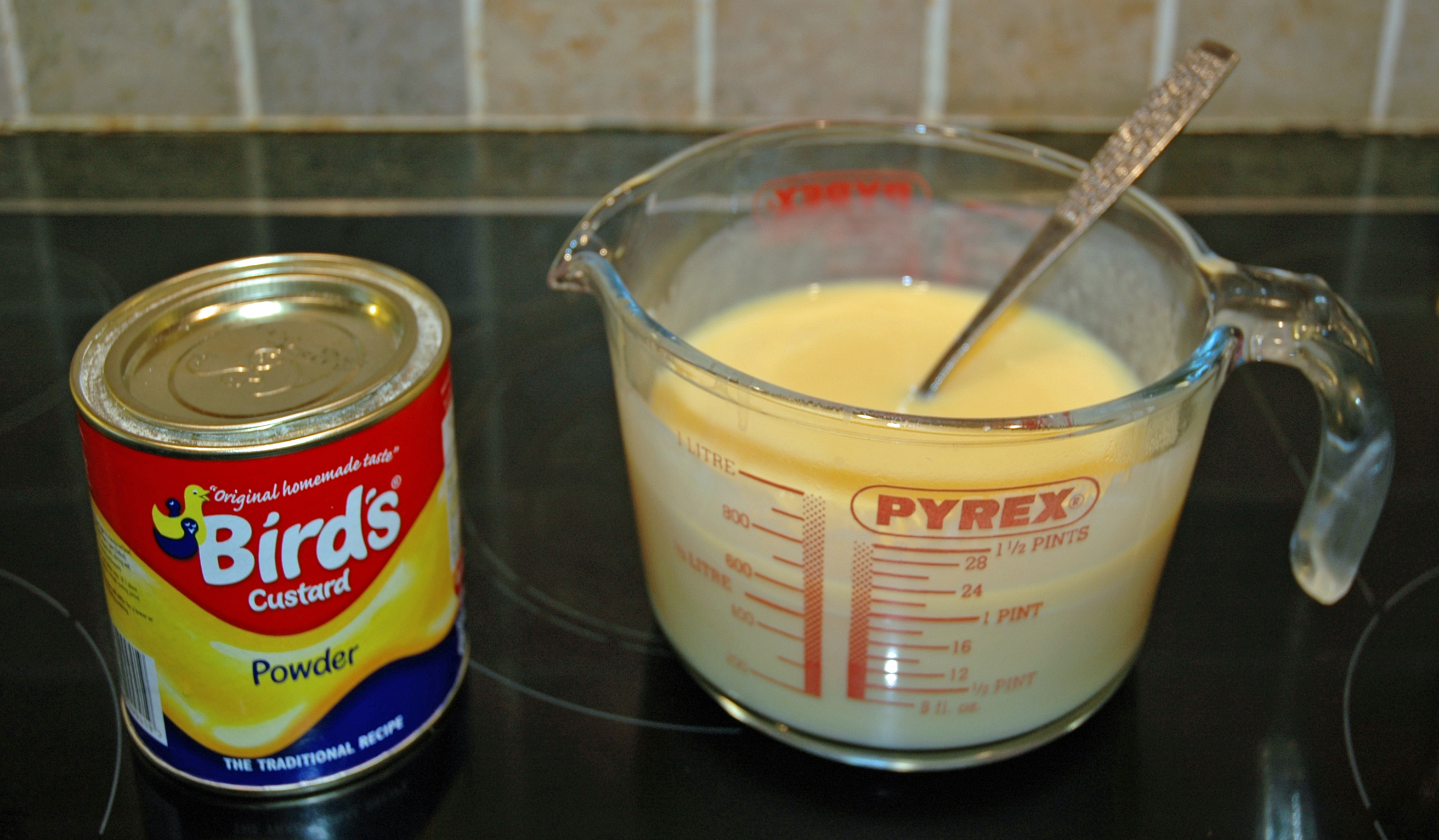
It is only in the world of corporate marketing, for example, that custard powder makes custard. The majority of custard powders contain flavourings and cornstarch but no egg proteins, making it a starch thickened mixture and not a custard. Not to say that starches are completely absent from the custard world, they can be used in conjunction with egg proteins to make a more robust gel. We see this in something like creme patisserie where we want the flavour of custard in a more robust gel that can be piped and used as a filling.
So, if we want to make a proper custard there is no getting around the fact that we are going to be dealing with eggs. And because we want to coagulate our egg proteins without over-cooking them, making custard is really an exercise in temperature control. The easiest way to do this is to have some specialised kit. If you were working in a laboratory, you would head straight to a water bath, a device that provides a constant even temperature. In the kitchen, you could use a sous vide machine, which is basically the same thing.
If you are lucky enough to have a sous vide machine at home, you can make a pouring custard by simply vacuum sealing your custard mix and chucking it into the water at a temperature of 79-82C for an hour or so and hey presto custard. Things get a little more complicated for a set custard, you need to find jars and make sure you only finger-tighten them to prevent pressure build up, but it’s doable and there’s plenty of recipes for it on the internet.
If you want to make custards like our ancestors did you’ll need a double boiler. The simplest double boiler is just a saucepan of gently simmering water with a heat proof bowl placed on top. The steam heating the mixing bowl provides a much gentler temperature gradient than using the hob directly and reduces the risk of coagulated proteins. To make the custard just use the mixing bowl to gently heat your mixture to 79-82C and wait for it to thicken to the consistency you are after. The only other thing you need to do is continually mix it to prevent proteins staying in the hotter areas at the bottom of the bowl.

Custard would be pretty boring if it was just egg and milk. What we really want is some flavour to go with the texture. For this reason the milk that is to become the custard is often steeped with flavour producing ingredients, like vanilla. By gently simmering the milk with something like vanilla it gives the flavour molecules, particularly the fat-soluble ones, some time to diffuse through the milk. The thing to watch out for here is that you don’t want your egg proteins getting anywhere near the hot milk until it’s below the temperature that will curdle those proteins.
You can just let your milk sit until it has cooled down then use your double boiler, or you can temper your eggs. You can temper your eggs by adding small amounts of the heated milk to them while vigorously whisking, much like when making mayonnaise, the aim here though is to control the temperature. When you’ve sufficiently diluted your eggs, you can add them to the bulk of the milk mixture.

So making custard is all about using temperature to create the ideal amount of coagulation in our egg proteins. In my frying an egg post, though, I said that the coagulation point of egg yolk proteins was around 70C. But here we’re talking about taking our custard up to 79-83C. Why aren’t our proteins overcooking? The difference arises because when we mix egg yolk proteins with the other ingredients their coagulation point increases. In custard we have a lot of fats and sugar. The fats and, in particular, the sugars interact with the egg proteins preventing them from forming a network. The egg proteins are also more dilute in the milk than they are in the egg yolk and so they have a harder time finding each other. All this means that we need a higher temperature than we did when frying our egg.
This also means that the coagulation point for your custard can vary from recipe to recipe, depending on the other ingredients4. This isn’t such a problem when making pouring custard as you can see how thick the custard is as you stir5. Things are a bit more difficult for a baked custard. If you aren’t using a sous vide then you are most likely using a bain-marie6, to make standalone custards like a flan or creme brûlée, or you have your custard in a pastry base, that has probably been blind baked.
Because you can’t be sure of the exact temperature that your tart will be properly set it can be difficult to tell when it is done. One rule of thumb is that the middle of the tart should be a little bit wobbly when you gently shake the tart, remembering that it will stiffen up a bit when you let it cool, but sometimes it just takes trial and error to perfect a particular recipe. If it is taking longer than expected, just be patient, turning up the heat is rarely the way to deal with a slow setting custard7.

Problems like these mean custards have a bit of a reputation for being tricky to make. I don’t really think that’s totally true. Sure a particular baked custard recipe can be tricky the first couple of times but, if you understand what’s going on, there is no reason you can’t be whipping up a pouring custard like a pro in no time. Despite any learning curve, it’s also well worth the time mastering custard for it’s versatility. It’s been said that custards are the mayonnaise of the pastry world; you can put whatever flavours you want into a custard, and chances are it will be delicious.
French-style ice-cream is basically frozen custard and if you want an easy recipe for creme anglaise then just melt some ice cream8. Although we often think of custard as a sweet ingredient it’s also a useful savoury component. Quiche is basically a savoury custard tart, Chinese and Japanese cuisines both have steamed savoury custard dishes, like chawanmushi from Japan, royal custard is used in Germany as a garnish for stews and soups and various Balkan versions of moussaka use a set custard as a topping.

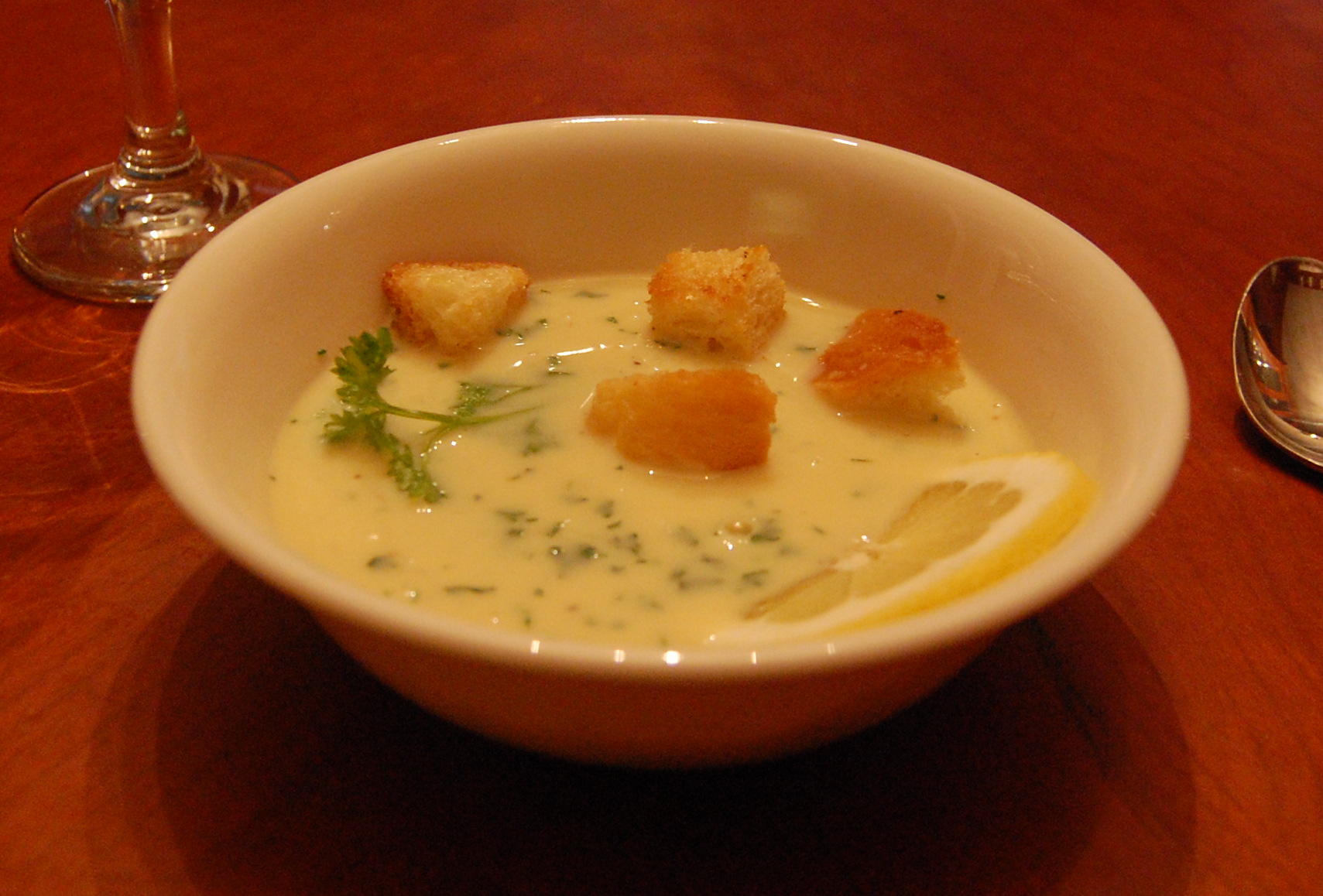
Although dairy is one of the defining characteristics of custard, there is no reason why you can’t use egg proteins to thicken other mixtures. Carbonara, for example, uses egg yolks to thicken its sauce using the residual heat of the pasta to coagulate the egg proteins. The Greek Avgolemono is a warm broth thickened using eggs and lemon juice9 that can be used as a sauce or a soup. Sopa de Ajo is a cherished Spanish garlic soup thickened the same way. Indeed, just about any soup can be thickened using eggs, sometimes after mixing with cream to form a rich liaison, as it is called in France.
I’ve said a few times now that eggs are one of the most versatile and useful tools that we have in the kitchen. Custard is one more piece of evidence to back up that claim. Its also a delicious piece of evidence and learning how to make custard is something you’ll never live to regret. Well, maybe, you may come to regret an expanding waist line if you use your custard-making superpower too often.
Footnotes
- A lot of custard recipes only call for the egg yolks, while others use the whole egg and yet others use only the whites. Generally, I’ll assume we are using yolks only, but I’ll call out situations where the part of the egg used may make a difference. ↩︎
- Now, hang on, you might be saying, we’ve already used eggs to thicken sauces, what’s mayonnaise but an egg thickened sauce? Well, the difference is that in mayonnaise we were using the emulsifiers from the egg yolk to create an oil in water emulsion, in custard we are denaturing the egg proteins so they will form a gel. ↩︎
- This is a bit off topic but apparently the plural form of the word roux is also roux. Given it is a French word that English has stolen I guess that this is an expression of the French rule that words ending with -s, -x, or -z keep the same spelling in the plural. But French has plural definite and indefinite articles that reduce confusion while English relies on the -s. So, I’m going to keep to the English rule that plural nouns have an added -s. I know we have zero plural nouns like deer and sheep, but I don’t think roux is thought of that way. Basically, it just sounds weird to my ear without the -s. ↩︎
- I’m also ignoring the fact that some custards can be made with the whole egg or with the whites only. We know that egg whites have a lower coagulation point than the yolks so if your recipe calls for whites not yolks, or whole eggs, the coagulation temperature will vary accordingly. ↩︎
- In fact, I recommend just taking a custard all the way to scrambled eggs at least once. Once you have made the complete journey you are better able to judge exactly where you are the next time. ↩︎
- A bain-marie is simply some container that is filled with water to provide a buffer from the direct heat of the oven. For example, if you take a baking tray and half fill it with water and then place ramekins containing a custard mix into the water for baking then you are using a bain-marie. ↩︎
- An exception to this are things like Portuguese custard tarts that are cooked at very high temperatures for a short period of time. I’ve never tried making these, but I expect it takes some trial and error to get the cooking time right. ↩︎
- OK, this is kind of true. Turns out that ice-cream is the kind of rabbit hole that leads to another post. In the States, at least, ice-cream can be a bunch of different things, and there is also something in the States called frozen custard that is made with a different churning process. So, it’s kind of true. If you are going to melt ice-cream to make creme anglaise than use a fancy, i.e. expensive, French-style ice-cream. ↩︎
- The use of lemon juice in Avgolemono has a biochemical basis distinct from it’s role as a flavouring. In the acids post we looked at how pH alters the charges on proteins which can change how they interact with each other. In this case the acid of the lemon alters the protein charges such that they are less inclined to coagulate making them more resistant to the heat of the soup. ↩︎


 The Science of Food


Leave a reply to Time Traveling Table Cancel reply