
Humans love a good story. We also love a simple story. We like our good guys to be good, our bad guys to be bad, we like a message that reinforces our beliefs and we definitely like some closure, everything wrapped up with a nice little bow. Our love of a well-formed narrative, and our tendency to use them to interpret the world around us, creates a divergence between our narrative choices and the real world. Guys in the real world tend to be grey and there are always complications, exceptions and qualifications. The unavoidable simplifications we make in creating our narratives creates a gap between the stories we construct and the real world. This gap is where nuance, subtlety and ambiguity live. Sometimes it is also where the truth goes to die1.
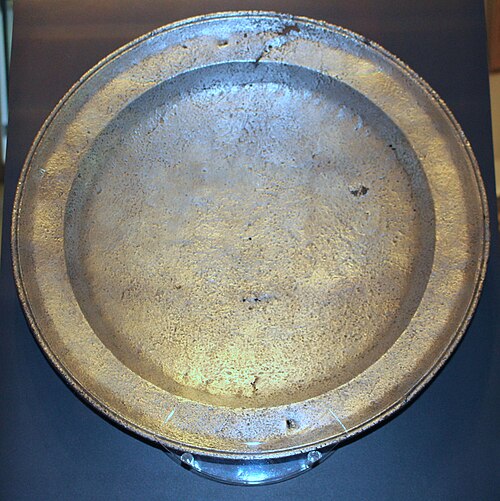
Case in point. If you google “tomato” you’ll very quickly learn that they were brought back from the New World by the Spanish and that no one in Europe ate them for 200 years because some aristocrats died from the lead that the acidic tomatoes leached from pewter plates. Simple story, some rich aristocrats died, good, the common man, our underdog, escaped because they were using wooden plates, also good. What’s not to like? Rich idiots getting their comeuppance and the simple folk enjoying a tasty tomato sauce. Problem is it’s not really true, and the real story is so much more interesting.
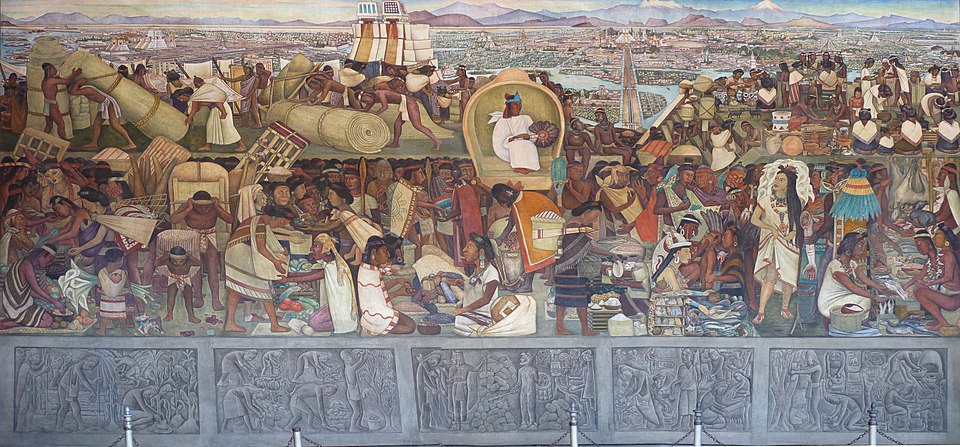
The truth is that over a long time a lot of Europeans knew perfectly well that tomatoes were safe to consume. The very first of these Europeans were the Spaniards living in the New World. In the mid 16th century, a Franciscan friar, Bernardino de Sahagún, reported the large amounts of tomatoes, of all shapes, sizes and colours, that were available in the markets of Tenochtitlán (the Aztec capital near Mexico City). He also described “shredded [food] with chile, with squash seeds, with tomatoes” and “… sauce of large tomatoes, sauce of ordinary tomatoes …”. This report was just one of many, tomatoes were a staple of the Aztec diet and the Europeans in the New World knew this well.
It was also clear that tomatoes were being adopted into the diets of the Europeans in the New World. Writing in the New World in 1585, another Franciscan, Alonso de Molina, described tomatoes as “a certain fruit used to add a sour flavour to stews and sauces”2. If tomatoes were being consumed by Spaniards in the New World then it only makes sense that those returning to Spain would bring not only the tomato but the taste for it as well. Sure enough, references to tomatoes also start popping up in Spanish literature as early as 1614, less than a hundred years after Cortés had set foot on the Yucatán Peninsula. One example, from 1621, is in a play called Amor médico (Love the Doctor) by Tirso de Molina, were there is reference not only to tomatoes but to their use in salads3.
Tomatoes grow well in Mediterranean conditions so it’s probably not a surprise that, from Spain, tomatoes spread around the coast of the Mediterranean, to Italy and then the south of France. As early as 1544, Pietro Andrea Mattioli, writing in Italy, noted that the tomato was cooked in the same manner as the egg plant4. You can trace this migration in the names given to recipes in France and Italy. In Italy, the very earliest tomato sauce recipe is for “tomatoes Spanish style”5. In France, dishes using tomatoes often include a reference to Spain; sauce espagnole, one of the French mother sauces, being one example, as well as various recipes with “Andalouse” in the title. Dishes featuring a garnish of tomatoes and peppers are typically called “à l’andalouse”, for example.

So, tomatoes, while not travelling with the blistering speed of those other New World immigrants chillies and vanilla, do seem to have been accepted, at least in Spain and Italy, reasonably quickly. So how did the stories of the widespread fear of tomatoes get started? One possible source of confusion is that, though it may seem odd to us, most fruit and vegetables were treated with a great deal of suspicion in the medieval and Renaissance periods. This was especially so when raw, and medical advice was to boil vegetables, basically to mush, to make them healthy. In general, bread, meat and wine were considered a healthy and appropriate diet6, if you were rich enough to afford them of course.

This general anti-vegetable sentiment was due to the huge influence of the Roman writer, Galen of Pergamon, on the medical profession in the Middle Ages. Galen believed that health came from balancing the four humours (blood, phlegm, yellow bile and black bile) through diet. Fruit and vegetables, especially when raw, were thought to be too “wet” and would putrefy in the gut producing phlegm and causing “melancholy”. Medical treatises of the time contained libellous chapters like “On aubergines and the bad sustenance they provide” and “On lentils and their harmful effects when eaten”7. Tomatoes, as a fruit, would not have been exempt from this advice.

Something that may have given a boost to the idea that tomatoes took a long time to catch on was that in England it was true, the English did take a very long time to start eating tomatoes. Why the tomato was particularly disliked in England is something of a mystery. Not known for their culinary adventurism, the tomato certainly suffered some very poor initial reviews in prominent English publications. One of the most damaging was that of John Gerard, published in his widely read treatise called “Herbal” in 1597. He declared the whole plant to be “of rank and stinking savor” and that tomatoes “… yeelde very little nourishment to the bodie, and the same nought and corrupt”8. Certainly enough to put anyone off their tomatoes.
The English knew quite well that people ate tomatoes with no ill effects, Gerard himself mentions this fact. It was just thought that tomatoes, with reference to Galen, where too “cold and wet” for England and better left to those living in hot climates9.
Whether it inspired the aversion, or was an excuse for culinary conservatism, it also probably didn’t help that the tomato had some very shady relatives. As a member of the plant family called the Solonaceae, colloquially known as the nightshades, the tomato kept company, and still does, with some of the most famously poisonous plants in European.

Belladonna (the deadly nightshade), apart from being a deadly poison, was thought to be a key ingredient in the ointment that allowed witches to fly; henbane10, a plant that smells so bad it is known as the stinking nightshade, contains hallucinogenic molecules and may have been behind the beserker rages of the vikings; and the mandrake, a plant that was believed to only grow under gallows where men’s semen had fallen was long considered an aphrodisiac and fertility aid. All of these plants, renowned in European myth and legend, were from the Solanaceae and thus a relative of the tomato.

The more believable of the effects of these plants, the hallucinations and poisoning but not the flying, are all the result of molecules produced by the plants in the Solonaceae as defence molecules, just like we saw in the Brassica. Plants of the Solonaceae, though, produce a different class of chemicals called alkaloids. These nitrogen containing molecules are a common plant defence molecule. We’ve seen alkaloids before, capsaicin, the molecule that gives chillies their kick, is an alkaloid. You’ll also find alkaloids like atropine, nicotine and scopolamine in the Solonaceae, amongst many others. Many of these alkaloids have some very interesting effects on humans.

With relatives like these, it was an easy task for anyone wanting to besmirch the tomato, and the court of public, and sometimes academic11, opinion in England was easily convinced. It didn’t help that, as a good Solonaceae, the tomato has its own complement of alkaloids. Tomatine, and sometimes solanine12, are in the leaves, stems and unripened fruit of the tomato plant and can cause some discomfort when consumed in large enough amounts13.
Whether it was poor reviews, the application of Galen’s medical theories, fear of alkaloids or its association with the nightshade family, the tomato did not catch on in England until the late 18th century. This aversion to tomatoes was exported to the British colonies in America, where tomatoes also didn’t catch on until the late 18th century. So, in the 17th and 18th centuries, we had the irony of Europeans in the New World using the tomato, an Aztec staple, as an ornamental fruit while it was being used in the development of entirely new cuisines in the Old World.
So it turns out that the idea that tomatoes were feared as “toxic apples” is only partially true. Personally, I think it’s probably not a coincidence that it’s easy to grow tomatoes in Spain, Italy and southern France, where tomatoes were initially adopted. Even if there was some initial hesitation, hunger is a good sauce and an easily produced source of food is hard to ignore for those at risk of hunger. In England, and other cold northern climates, tomatoes were not so easily grown and so there was no pressure to get over initial hesitations when times were tough. If you can’t really grow tomatoes, why not tell some tall tales about weird foreign foods to justify your own preferences?
Speaking of tall tales, the final tomato tall tale is that rich people died from eating tomatoes off pewter plates that contained lead. This is almost certainly a modern invention. There are no contemporary reports of this happening and the amount of lead that would leach off a pewter plate is far from enough to cause acute lead poisoning. For example, given these people were also drinking wine, which is more acidic, from pewter goblets there is a notable lack of reports about acute lead poisoning after a night of carousing. It wasn’t safe using lead plates and cups but the pathology would have developed over a long time and it is unlikely that it would have been associated with tomatoes.
The pewter plate story is a good one, especially paired with the idea that the poor, eating off wooden plates were free to enjoy tomatoes. But it almost certainly isn’t true. Neither is it true that tomatoes in Europe were rejected out of fear and ignorance. The tomato was accepted pretty quickly in some parts of Europe but rejected in others. Why this happened, to me, is much more interesting. Why did some people accept tomatoes and others reject them and what role did the media of the time and the stories it told play in this process? To me this is the real, well, story. It is also the part of the story that has real relevance for us. Now we have an internet that has supercharged our ability to create and propagate all sorts of narratives, an understanding of the way we interpret our world through our stories is more important than ever.
Footnotes
- OK, I know, I’m drifting into areas where I lack qualifications. I think I might be describing post-modernism but also by suggesting the existence of a truth I’m also disagreeing with post-modernism. I don’t know. I’m a scientist not a philosopher and I hope people will understand what I’m trying to get at here: our stories sometimes gloss over things for the sake of narrative flow. ↩︎
- You can see the Spanish version here. I can’t read the Spanish but got the translation from here. ↩︎
- The complete quote, in English, is:
Oh silk serge,
Oh fine skirt,
Oh tomato salads
With rosy cheeks,
Sweet and sharp at the same time!
I got this translation from here (pg. 17) but you can read the original here (pg. 24). There is a complete English translation of the entire play here but the tomato quote doesn’t seem to have made it through the translation process. ↩︎ - Fried in oil with salt and pepper. ↩︎
- Published in 1694 by Antonio Latini, in Lo Scalco alla Moderna (The Modern Steward). It’s actually what we would call a salsa. You can read the original recipe here. It’s on page 444, titled Salfa di Pomadoro, alla Spagnola. ↩︎
- If only this was true! ↩︎
- These titles were from a health treatise by Núñez de Oria called Regimiento y aviso de sanidad (Regimen and Advice on Health). ↩︎
- Though he did make reference to the fruit being eaten in Spain and Italy, adding more evidence to tomatoes rapid uptake in Spain and then Italy. ↩︎
- In 1640, John Parkinson, the herbalist to King Charles I, provided this advice in his masterpiece, Theatrum Botanicum: The Theatre of Plants. His discussion of tomatoes, or Pomum Amoris as he calls them, is on page 352. ↩︎
- The belladonna (“pretty lady” in Italian) is, according to legend, named after the practice of Italian woman during the Renaissance using the juice of the berries as an eye drop to increase the size of their pupils. A very dangerous practice. ↩︎
- Richard Bradley, Professor of Botany at Cambridge University, denounced the tomato, and other love apples, as dangerous in his botanical dictionary from 1728. You can read it in volume 2, here. If you don’t want to spend two hours searching for the reference like I did, it is in the appendix under the heading “Pomum Amoris”. ↩︎
- Solanine is the alkaloid typically associated with eggplants. ↩︎
- Tomatine in unripened fruit is the reason that green tomatoes are bitter but, you would need to eat a fairly large amount of them to experience any ill effects. ↩︎


 The Science of Food


Leave a comment