
In 1865, Otto von Bismarck, the conqueror of France, the architect of German unification, Germany’s first Chancellor and the steely-eyed hard man of realpolitik challenged a scientist to a duel. This wasn’t an early case of nerd hazing. Rudolf Virchow, apart from his scientific career, was also the leader of the Progressive Party and one of Bismarck’s most vocal opponents1. Virchow had angered Bismarck by questioning his honesty2 and Bismarck wanted satisfaction.

The oft told story goes that Bismarck dispatched his seconds to issue the challenge on his behalf. They found Virchow in his home hard at work, bent over a bench studying sausages (this is Germany after all). When told of the challenge Virchow insisted that, as the the one being challenged, he had the right to select the weapons. Grabbing two sausages off the bench he brandished them saying that the duel would be fought with these. One, he said, was a perfectly normal sausage the other was contaminated with Trichinella spiralis. Each duellist would select a sausage and eat it, the winner enjoying a good sausage, the loser getting a bad case of trichinosis. When informed of this unusual choice of weapons, the Iron Chancellor quickly backed down.
In a post Enlightenment society this was, and still is, a great story. Reason and logic triumphing over bluster and violence. An inspiration for all rational-minded people. If it were true that is. Unfortunately, it is very unlikely that this ever happened. Bismarck did challenge Virchow to a duel but Virchow simply rejected the challenge and everyone moved on3. The story of the sausage duel didn’t appear till 1893, some thirty years after the events, when, it should be noted, Bismarck was rapidly approaching 80 years of age and couldn’t go around duelling people anymore.
Regardless of its veracity, the story of the Great Sausage Duel is still interesting for the starring role played by a food borne parasite. Most people today, faced with a sausage duel, would say “Tricha-what” and ask the nearest AI what the hell a Trichinella is? But the general public in the 19th and 20th centuries were a lot more aware of the possibility of picking up parasites from their food. This was mostly because there were a lot more parasites in their food. But it is significant that whoever made up the story of Bismarck and the Great Sausage Duel used Trichinella. This parasite, caught by eating under-cooked pork, was one of the most feared parasites of the 19th century.
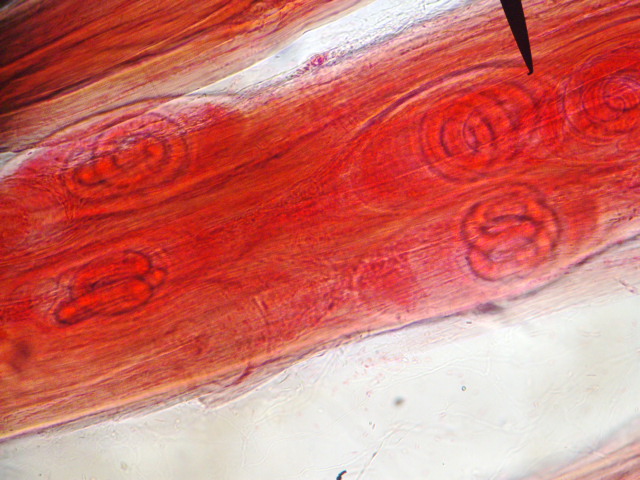
My feeling is that part of the reason that Trichinella was so feared, apart from the sickness they cause of course, is that we can see it with the naked eye. It’s hard to feel revulsion for a bacteria or a protozoan parasite4 that you can’t see. But, with Trichinella, if you look carefully, you can see the parasite coiled up in the flesh of the animal you are about to eat. The same goes for parasites like Trichinella, a group we call the helminths, or the parasitic worms.
Although the helminths are not closely related genetically, they all look a lot like worms, or at least flattened worms, and they are all parasitic. In scientific nomenclature the helminths mostly come from three families of organisms: the Nematoda, the Cestoda and the Trematoda5. But you might know them better by their common names, things like hookworm, whipworm, pinworm and all the different tapeworms are helminths.
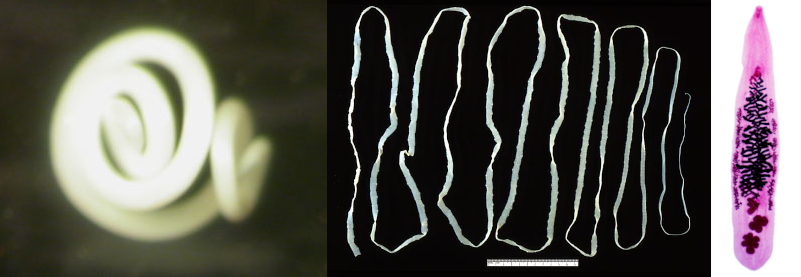
Humans have been living with the helminths for a long, long time. We’ve co-evolved with them over millions of years and, even today, there are some 300 helminth species that parasitise human beings. A large proportion of these helminths are food borne, that is they can infect us via the food we eat. Helminths are not the only food borne parasites, but they are a very important class of this type of infection and, frankly, even without considering their importance to our food production, they are pretty interesting organisms in their own right. If, that is, you can get over some of the grossness that we will soon encounter.
Part of what makes helminths so interesting is the bewildering array of different biology and lifestyles that you encounter when you start looking at them. For a start, almost all helminths move through multiple, distinct morphological stages over the course of their life. The number and type of which vary from species to species. When you think about it this multiplicity of body types is pretty useful for a parasite.
Any infectious organisms needs to work out how they, or their offspring, are going to move to other hosts. Bacteria and viruses, for example, can be transmitted by the transfer of bodily fluids between hosts just the way they are. They can easily be transmitted when we sneeze, cough and, often, just breathe. Bacteria and viruses can also, generally, survive for a while outside our bodies and so they can find a new host indirectly, via things we all touch.
Bacteria and viruses, though, are small, really small. Helminth parasites, on the other hand, are big. Giants really, when compared to microbes. They can’t be sneezed out of the body and hope to be transmitted to a new host. Also, the form they have in the host is much less likely to be suitable for hanging around in the outside world for too long. They need to come up with a strategy for infecting new hosts, which means they often need to come up with a strategy for dealing with the outside world when they leave their host and seek greener pastures.
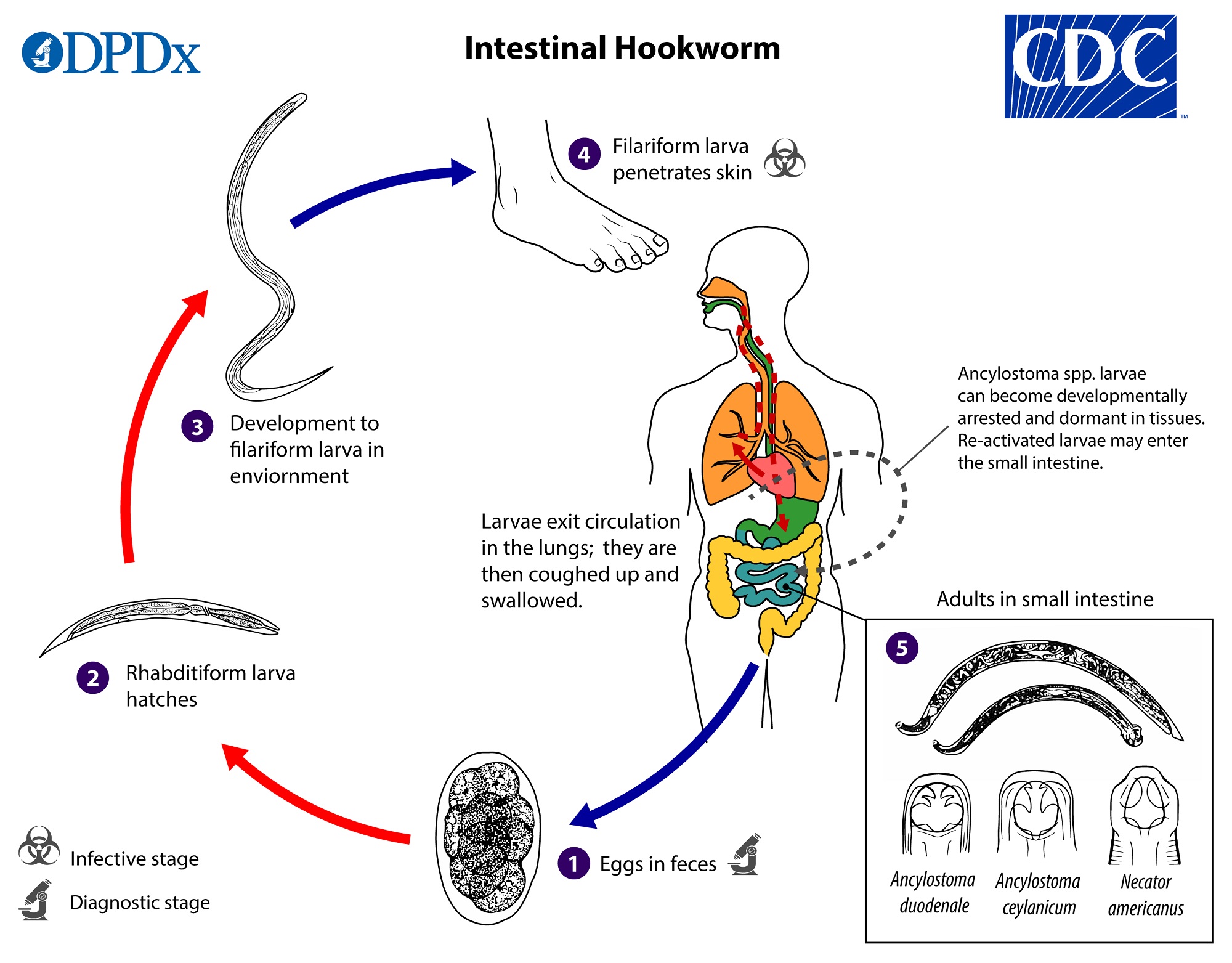
The solution that many helminth parasites have come up with is to adapt their multiple forms to different parts of the parasitic life cycle. At a minimum a helminth parasite will pass through three stages: egg, larva, and adult. In general, the larva is the stage that does all the work. The larva can often survive in the outside world, and it is often the infectious form of the parasite. In something like a human hookworm, for example, the larvae hatch from eggs passed from the hosts faeces. The larvae can survive in the soil for quite a while, waiting for a stray human to come along. When a human does make contact with the larva it can attach, burrow through the victim’s skin and start a new infection6.
Hookworms, though, aren’t a food borne parasite. Food borne parasites are often those in which a larva infects an intermediate host which is then eaten by the definitive host (the definitive host is defined as the host in which the adult parasite lives). An example of this are tapeworms. Adult tapeworms are hermaphroditic and they can sit in our stomach pumping out eggs, sometimes hundreds of thousands of eggs per day, that pass out of our bodies via the faeces. The eggs can then survive for a long time in the environment where, if there is inadequate sanitation, they contaminate plants, soil and other places.
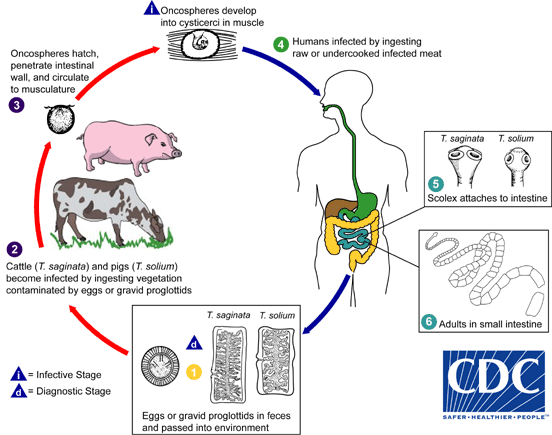
Pigs or cattle ingest these eggs which hatch into larvae in the gut of the animal. The larvae then migrate to striated muscles7 where they form a cyst and settle down to wait for something to come along and eat their host. If a human, obligingly, eats under-cooked pork or beef, the larvae excyst in our gut, develop into adults and the whole thing starts all over again.
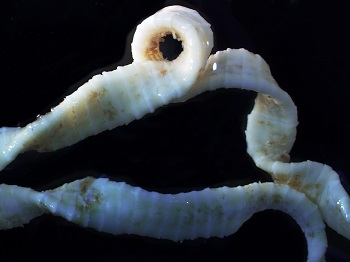
The fish tapeworm, Diphyllobothrium latum, is even more creative and has three hosts: tiny, aquatic crustaceans called copepods, a fish and a fish-eating mammal, like a human. The cestodes, the various parasitic flukes, also often have a three-host life cycle, though often having a snail instead of a copepod as one of the intermediate hosts. Each host in the life cycle of these parasites has its own distinct morphological form of the parasite.
Sometimes the food borne parasite doesn’t need a larva that can survive outside the body, that is they don’t need an intermediate host8. This is the case for Virchow’s apocryphal saviour, Trichinella. Adult worms in the gut of an infected organism mate and the female starts releasing larvae into the blood and lymphatic systems. The larvae, then move to skeletal muscle and encyst. They can stay there for a long time, sometime years. Until their host is eaten by another organism. The acids of the stomach activate the encysted larvae, and they migrate to the small intestine and develop into adults and the whole cycle starts again.
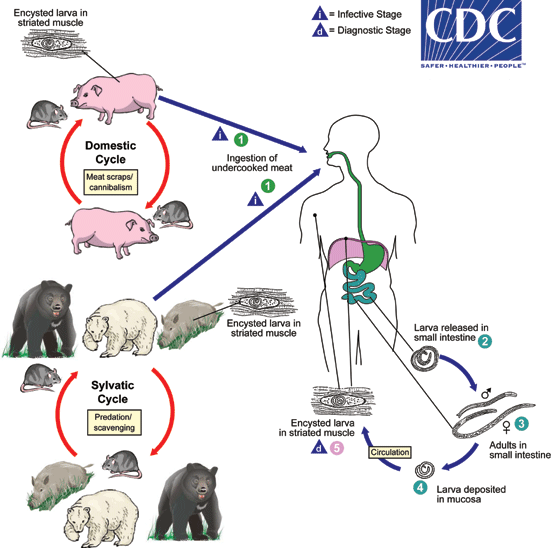
When humans get trichinosis, the disease caused by Trichinella, it is a bit of a dead end for the parasite because not many things eat humans. The Trichinella larvae don’t give up though and they will still migrate through our body an encyst in our muscles. It is this migration that causes the most debilitating symptoms of trichinosis. The larvae transform muscle cells into what are known as ‘nurse cells’ that can hamper muscular function and cause a bunch of different symptoms. Though they normally do not encyst in heart muscle the migration of the larvae through the heart, and temporary penetration of heart muscle, can cause severe inflammation and permanent damage. Even worse, though it’s rare, the larvae can get lost and end up in your brain. If this happens, they can cause encephalitis which can lead to something as mild as a headache or to much more serious conditions like delirium and coma.
The problem of larvae ending up in the wrong place is a common one. Cysticercosis, which you can get by accidentally ingesting the eggs of a tapeworm, is caused by the larvae encysting in various places around our body. Humans are often the definitive host of a tapeworm but we can become an accidental intermediate host by ingesting the eggs. If we do this the larvae will hatch and migrate through our body and encyst just like they would in a pig or cow. If, like in trichinosis, the larvae get lost and end up in your eye or your brain you can get seriously ill. Because tapeworm eggs can contaminate things like lettuce or other vegetables that we eat raw, even vegetarians can’t escape food borne helminth infection.
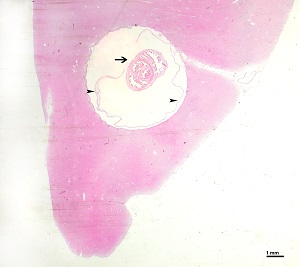
Cysticercosis is also a danger if you have a tapeworm infection of your own. Tapeworms living in your intestine will be releasing eggs into your faeces. This means that if you don’t wash your hands at the appropriate time, you can autoinfect yourself with the eggs. If that happens, you’ll be both the definitive and intermediate host at the same time and you’ll have adults in your gut and larvae encysted in your tissues. Not a great state of affairs.
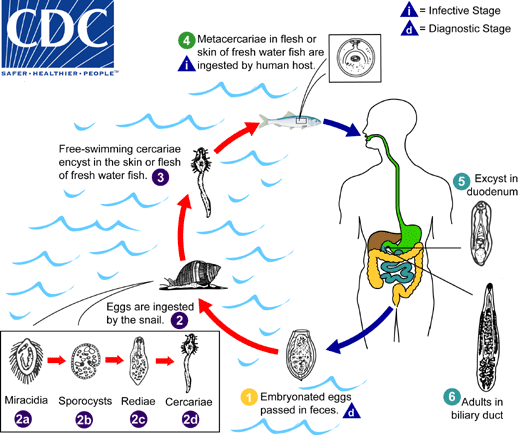
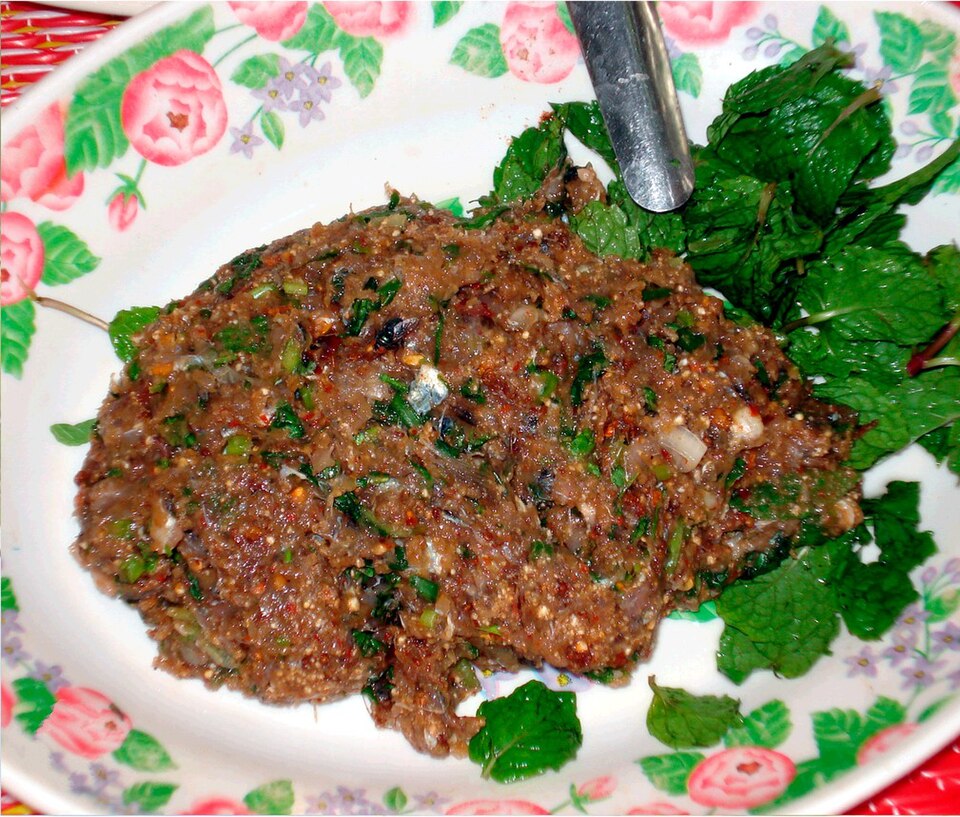
If I haven’t scared you enough already there are also parasites that can give you cancer. In Thailand, you can pick up a liver fluke called Opisthorchis viverrini by eating raw fish. In parts of north-eastern Thailand, fermented fish is used to make a dish called Pla Ra. If the fish that makes up your Pla Ra has Opisthorchis encysted in their flesh, then you can become infected by the adult form of the parasite. The adults live in our bile ducts and can survive there for a long time, potentially decades. A chronic infection causes long-running inflammation of the bile duct that can lead to a cancer called cholangiocarcinoma. A rare cancer in most parts of the world, cholangiocarcinoma is extremely common in parts of Thailand where Pla Ra is a traditional food.
In light of all this, I’m not sure there is a better argument than parasites for the importance of both personal hygiene and the application of appropriate sanitation in agricultural production9. Though far from a general rule, many of the important food-borne helminth parasites get their eggs or larvae out into the environment via the faeces10. So a lot of food-borne parasitism can be prevented by the simple expedient of not pooing on your food, or near where your food is grown. You also want to follow basic hygiene guidelines like washing your hands after going to the toilet and be confident that the people preparing your food are doing the same thing.
The other thing you can do to avoid parasite infection, at least in cooked food, is to cook it to a high temperature. In general, the USDA recommends cooking meat to at least 63C (145F) though the safe temperature varies widely (see here for the full list). This, however, applies to animals that are raised in modern facilities following government enforced levels of hygiene and inspections. If you are eating wild game then you want to be cooking your meat to at least 74 (165F), parasites can be very common in wild animals in some areas.
If you are eating raw meat you want to be really, really sure that it does not have parasites. While this seems obvious with pork and beef, something that we may not think about much are fish-borne parasites. A lot of the fish we eat is wild caught which means they have an increased chance of being infected with parasites. We’ve already seen one fish-borne helminth, Opisthorchis viverrini in Thailand, but parasites like Anisakis, Pseudoterranova, Gnathostoma and Eustrongylides are commonly found in marine fish like salmon, herring, and mackerel. In developed countries our major exposure to raw fish is in sushi or ceviche and picking up something like anisakiasis (infection by the larval form of Anisakis) is more common than you think. In Japan, for example, as of 2010, there were about 2,000 cases reported annually, a number that has likely only increased over time.
Sometimes we can inadvertently increase our risk of infection. For example, it wasn’t really until the 1950s that the risk of getting Trichinella from pork was reduced to acceptable levels in developed countries. Which is why many people still will not consume medium rare pork. There are a number of reasons that we found it a lot harder to control parasites in pigs than cows, but part of the problem is that pigs eat everything. Where cows eat grass, pigs root around in the soil, picking up eggs from their own faeces, eating whatever they find. Controlling parasite infections in modern pork producing facilities often comes down to keeping the pigs in a controlled space away from the soil and away from their own faeces11. This means that organically raised pork, where pigs are free to root around in the soil, may have a higher parasite risk than commercially produced pork.
Travel is another area where you want to consider your risks of contracting a food borne parasite. I don’t want to parasite shame anyone, but it is a fact of life that developing countries often do not have adequate sanitation infrastructure and so have a high parasite burden. When lots of people in a population have parasites there are many more opportunities to contract a parasite if you visit. For example, some studies have found high levels of parasite infection in food preparation workers in some developing countries (see here for one example). If there are high rates of infection, people are going to be people, and someone somewhere is not going to wash their hands properly and they will pass on an infection. It is well worth checking with your doctor prior to, and after, visiting some areas of the world to manage the risk of parasitic infection.
I hope I haven’t discouraged anyone from, well, eating or travelling or even just leaving the house. I guess we need to realise that helminths have been with us for a long, long time and they will probably be with us for a long time to come. Although, rarely, a helminth infection can be life-threatening, in general they are easily treatable12, especially in developed countries where the risk of re-infection is relatively low. This however is not medical advice, if you feel ill or think that you may have been exposed to parasites visit your doctor immediately. Otherwise, have a healthy appreciation of the risks of eating under-cooked foods and the context in which you are doing so. Wash your hands after going to the toilet and support government agencies that enforce the various regulations that make sure that parasites stay out of our food.
Footnotes
- How good a scientist he was is open to debate. He opposed both germ theory and Darwinian evolution, the two greatest scientific advances of the time. ↩︎
- If you really want to anger a liar, question their honesty. ↩︎
- Duels were falling out of fashion at the time as a way of selecting differences so Virchow didn’t really suffer any reputational damage by refusing to duel. If you are interested, there is a much more detailed description of the great sausage duel here. ↩︎
- Protozoans are another class of food borne parasites that are almost entirely microscopic. I’ll cover them in another post. ↩︎
- I’m glossing over some details here. Trematodes and cestodes both belong in the same phylum, Platyhelminthes, which makes them somewhat related genetically. Nematodes, though, are grouped with the arthropods, and other molting animals, while the platyhelminths are grouped with molluscs. The last common ancestor of these two groups diverged sometime before the Cambrian period, 500 million years ago or so. I’ve also not mentioned a final class of helminths, the Monogeans. These organisms are related to cestodes and trematodes, but they tend to be surface parasites and rarely infect humans. There’s quite a bit of discussion over these evolutionary relationships, and how parasitism evolved in the different groups. If you want to get in the weeds you can start here and here, but block off a weekend, or maybe more. ↩︎
- In this case the larva makes its way around the body via the blood system and when it gets to the lungs it will burrow out of the lungs. The host will then cough up the parasite and, hopefully from the parasites perspective, swallow. Once in the intestine the larva will develop into adults that start passing eggs out of the new host via the faeces. Yep, parasites can be pretty gross. ↩︎
- Striated muscle is muscle that has striations, caused by myosin and actin, when observed under the microscope. Basically, it’s skeletal muscle, although cardiac muscle is another important straited muscle. ↩︎
- These are normally nematode parasites that have an absolutely bewildering array of different life cycles. ↩︎
- OK, cholera and dysentery are also compelling arguments. ↩︎
- Though not always, lung fluke larvae are coughed up from the lungs where they can exit the body via sputum, or be swallowed and exit with the faeces. The eggs of some Schistosoma species, while not a food-borne parasite, can pass through urine and things like pinworms, again not a food-borne parasite, lay their eggs on the perianal skin (i.e. the skin around the anus) at night. Yep, parasites are gross. ↩︎
- As well as testing and other measures that you can read about here. ↩︎
- One of these is Ivermectin. The drug that, bafflingly, has become something of an internet fixation for a whole bunch of things. One of the correct ways to use Ivermectin is for infection by filarial worms. These organisms are nematode parasites that are spread by mosquitos or flies in the tropics and subtropics. Filarial worms cause a number of diseases including elephantiasis, but they aren’t food borne. Though you could get one by being bitten while you are eating, I suppose. ↩︎
 The Science of Food


Leave a comment