
As a young man, and even into his forties, Henry VIII was a charismatic, athletic and highly attractive individual. He stood, for his times, a towering six feet two inches and he was renown for his prowess on the jousting field and for excelling at hunting, wrestling, tennis, and archery. But, by the time he died at 56, Henry was so obese that he needed to be winched onto his horse, suffered from suppurating ulcers on his legs, gangrenous toes, insomnia, paranoia and depression, he probably had diabetes and he might have died of syphilis. When he did die, before his burial at Windsor castle, his coffin burst open in the night and his corpse was desecrated by dogs.
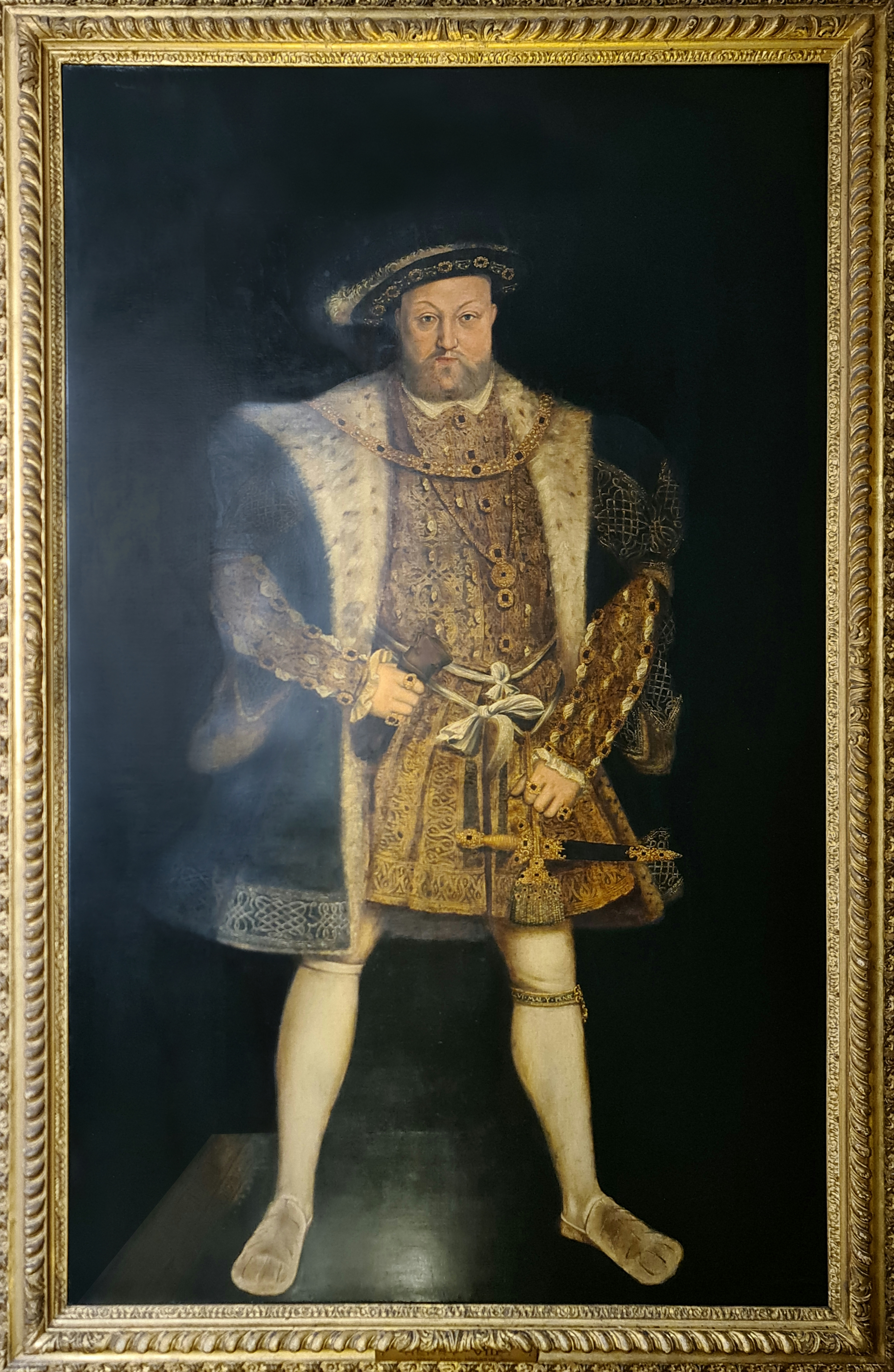
It’s hard to feel too sorry for him, Henry was not a good person. He killed more of his subjects than any other British monarch, including two wives (Anne Boleyn and Catherine Howard), two well-known Thomases (Moore and Cromwell)1, many members of his court and somewhere between 20,000 and 72,000 other people of England2. He also destroyed the Catholic church in England and installed himself as the religious head of England. Not necessarily a bad thing some would argue but his motivation, i.e. he wanted a divorce, hardly makes him a sincere religious reformer. In short, I imagine Henry’s health battles inspired plenty of schadenfreude before he finally died in 1547.
Henry’s decline also made him a bit of a symbol for the terrible retribution that could be visited on you if you lived a life of gluttony. No one remembers that for most of his life Henry was an athletic and good looking guy, they remember him as the gluttonous, wife killing, ulcerated monstrosity that needed to be pushed around in a cart. It also made him a bit of a poster boy for gout. It’s generally accepted that Henry had gout, he reputedly ate 5000 calories a day and given the historic descriptions of his pain and his general physical description it seems a reasonable guess. But whether he had gout or not isn’t really important because Henry has become the person most of us think of when we think of someone with gout anyway.

Most of us have heard of gout and most of us think of it as disease of over-consumption, the kind of over-consumption we associate with someone like Henry VIII. Historically, this association was strong that gout was often called the “disease of kings”, implying that the only way to get gout was to have a wallet large enough to finance the necessary gluttony. And it goes way back. Hippocrates discussed gout in the context of over-consumption in his Corpus Hippocraticum, he called it podagra, and there was even a goddess of gout, also called Podagra, who was born of Dionysus (the god of wine) and Aphrodite (the god of love) reflecting the belief that gout was a consequence of too much food, wine and sex.
It really doesn’t say much for humans as a species that by around the 9th century the association of gout with nobility was so strong that it became a badge of honour. Gout was so useful for status signalling that people in England would visit the waters at Bath in the hope that they would contract the gout3. Even as late as 1900 the London Times reported that: “The common cold is well named — but the gout seems instantly to raise the patient’s social status”4. Conclusive proof that human stupidity existed long before Instagram.

The obvious question is whether all this is actually true? Is gout really a disease of gluttony and debauchery? Because gout feels so Victorian it may come as a surprise that gout is still very much with us. It is the most common form of inflammatory arthritis and about 56 million people were afflicted with gout as of 20205. Does this mean that us modern folk now have a lifestyle on par with the kings of yesteryear? Are we eating ourselves into gout just like our well-off ancestors? The traditional view is that those afflicted with gout have done it to themselves, that gout is a self-inflicted condition brought about by the gluttony of the sufferer. But is this true? Have people with gout done it to themselves?
Well, what may have surprised our snobby ancestors embracing their gout ridden joints as a symbol of their status is that humans are not the only primates that are susceptible to gout. Far from being a disease of kings it is not even a disease of humans, any old chimp or gorilla can also develop gout. This is because the root cause of gout is the lack of an enzyme called uricase and none of the primate group, of which we are a member, possess a working copy of the uricase gene. In other mammals uricase catalyses one of the final steps in the metabolism of purines. Purines are nitrogen containing, double-ringed structures that make up DNA, RNA and other compounds in the body (we’ve come across purines before as adenosine, important in the caffeine story, is also a purine). Uricase catalyses the conversion of the insoluble uric acid into the much more soluble molecule called allantoin6 which can then be secreted via the kidneys.
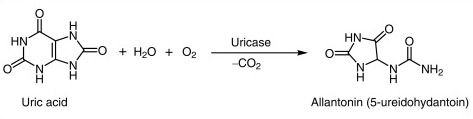
In humans, and other primates, because we have no uricase we end up with uric acid circulating in our blood rather than allantoin. Uric acid is very so insoluble so when enough uric acid builds up in the blood stream it will start to crystallise (much like sugar crystallising when super-saturated in water). Crystallised uric acid then accumulates in the joints causing a painful inflammatory response. This, basically, is what gout is, an immune response to crystals of uric acid in the joints. It is very painful and comes in sudden bursts, often starting in the big toe, that can last for days at a time. In extreme cases hard lumps of urate crystals called tophi can form under the skin.
Now you may be asking why don’t primates, like all the other mammals, have a functioning uricase when its absence causes so many problems? Even more confusingly, we do actually have a uricase gene it’s just not expressed, that is the protein encoded by the gene is not produced7. This suggests that long ago our ancestors did have a functioning uricase but we subsequently got rid of it for some reason. Why would we do such a bone-headed thing?
Short answer is we don’t actually know. But we have some theories and these theories are very interesting for what they have to say about some common and very modern problems. Firstly, we do know when we “switched off” our uricase. This deactivation occurred in the mid-Miocene era (approximately 15-11 million years ago) and it happened in our ancestral apes, that is in the common ancestors of ourselves and the other primates. This is why other primates are also susceptible to gout. What is interesting about this timing is that it occurred when global cooling had caused a reduction in the food that our ancestral apes lived on, basically fruit. So, the evolutionary move towards the loss of uricase activity occurred when our ancestors were living in famine.
In 1962 James Neel, a population geneticist, theorised that genes that evolved as a response to famine could actually be the cause of things like obesity and diabetes (and gout if you can see where I’m going with this) when food became more abundant. Uricase could be an example of one of these “thrifty genes”. The thinking behind uricase giving a survival advantage during times of food scarcity comes down to its relationship with fructose, coincidentally the sugar that is naturally found in fruit, the major food of our ancestral apes.
Fructose is a very interesting molecule and, among the many things it does in the body, it is what you could call a “survival trigger”. Fructose pushes the body away from an energy burning emphasis to an energy storage emphasis and it does this by interfering with insulin signalling. If you remember the post on ultra-processed foods, high blood glucose levels will raise levels of insulin which then represses hunger, stimulates the production of fat in fat cells and promotes the uptake of glucose by muscle cells. It basically makes you stop eating because you’ve got enough energy for now.

Fructose interferes with this insulin signalling and keeps the body in a state of “hunger” despite what high blood sugar levels are telling the body. In simplistic terms your body will ignore insulin and keep storing energy as fat. Where this intersects with uricase is that higher levels of uric acid enhances the effects of fructose by increasing the production of an enzyme called fructokinase (or ketohexokinase leading to its shorthand KHK that you’ll see in various sources). Importantly, increasing the level of this enzyme also increases the levels of uric acid. If you remember that respiration provides ATP (adenosine triphosphate) that is broken down by KHK to power it’s reaction, you can see that we’ll have a positive feedback loop because adenosine is also a purine that will be broken down into uric acid.

All of this makes sense if you are living in conditions where food is scarce. Individuals that could store more energy when food was available would have a great advantage when food starting running out. It’s the parable of the ant and the grasshopper. Sure you have more uric acid in your blood, that can cause problems like gout, but you get purines from your diet and if you aren’t eating a lot anyway there isn’t much risk of uric acid building up to harmful levels. The evolutionary pressure to get rid of uricase was that our ancestors with higher levels of uric acid were better at storing energy as fat which meant it was them that survived when the food ran out.
Why uricase could be thought of as a thrifty gene is that it was clearly a useful adaption in the mid-Miocene when everyone was hungry but now, when we are not hungry and actually consume large amounts of fructose in our processed foods, it is much less helpful. One theory is that our modern obesity epidemic is a result of the ability of fructose to stimulate fat storage. We live in a world awash with fructose and when combined with our high uric acid levels this is what is driving the obesity epidemic. Our bodies think famine is imminent but the food never stops coming; the result is obesity.
If we get back to gout now we can start to see how things can go wrong for some people. Although it’s easy to say that our ancestors “deactivated” uricase things are a lot more complicated than that. If you knock out the uricase gene in mice they’re dead a few weeks later so there was a lot of co-evolution that needed to happen for us to be able to handle elevated levels of uric acid in our blood. The kidney possesses transporters that can actively remove uric acid from the blood stream and excrete it (although 90% of uric acid is re-exported to the blood). Uric acid can also be excreted into the gut lumen and the widespread existence of bacteria capable of breaking down uric acid in the microbiome suggests that we may rely on some bacterial help.
All this chemical machinery that we need to handle uric acid means there are a lot of genes involved. When you have a lot of genes involved in anything then there is ample opportunity for genetic variation (my post on bananas covers genetic variation if you need a refresher) and it is becoming clearer and clearer that gout is not a disease of gluttony but a genetic condition. A genetic study from late 2024, using 2.6 million people, identified 377 loci (sites in our genome) that could be associated with gout. Other studies have shown that genetic variance explains 100 times more variance in uric acid levels than diet and alcoholic consumption combined. Even more interesting is that gout can be traced through the family trees of European and French royalty, showing that gout was handed down from heir to heir (see more here if you are interested).
This is not to say that we can just pig out on all the foods associated with gout. Foods like red meat, organ meats, some seafood, alcohol, beer especially so, and fructose containing soda drinks are all associated with gout and rightly so. If you have the genetics that predispose you to gout then diets high in these foods will give you gout. If you don’t have the predisposing genes you may not get gout (although you can still can gout regardless). The point is that two people with exactly the same diet but different genes can have very different outcomes when it comes to gout because of their genetics. If you do have gout, diet is still an important part of your therapy.
Though it is no longer considered a disease of the rich there can still be a stigma attached because of the widespread belief that gout is a self-inflicted condition. Hopefully we now know that gout is not simply a case of rich people eating too much food. Most cases of gout are genetic and probably involve mutations in the many, many genes that are involved in our metabolism, fructose, uric acid and otherwise. The way we should be thinking about gout is that it is just one more way that the hard, frugal existence that our ancestors led affects our health and nutrition today. Our bodies are evolved for conditions of famine and we live in a world of plenty it’s no wonder that our metabolic pathways are all a bit whack.
Footnotes
- I can never keep prominent people called Thomas who were killed by English Kings called Henry straight. Henry VIII killed Thomas Cromwell and Thomas Moore while Henry II killed Thomas Becket (well two of his knights killed him in a church) but I can never get them right at trivia night. Thomas Cranmer was another Archbishop of Canterbury who was killed by a monarch but in this case it was Mary I (aka Bloody Mary”). ↩︎
- 72,000 is probably way to high and 20,00 was the lowest estimate I could find. ↩︎
- You can read more about this here. ↩︎
- You can read more about the history of gout here. ↩︎
- See here for these statistics. ↩︎
- Technically it breaks urate into 5-hydroxyisourate which is then converted to allantoin. ↩︎
- A gene that is present in the genome but not expressed is called a pseudogene. ↩︎


 The Science of Food


Leave a comment